What does fashion have to do with bioeconomy? More than you might think.
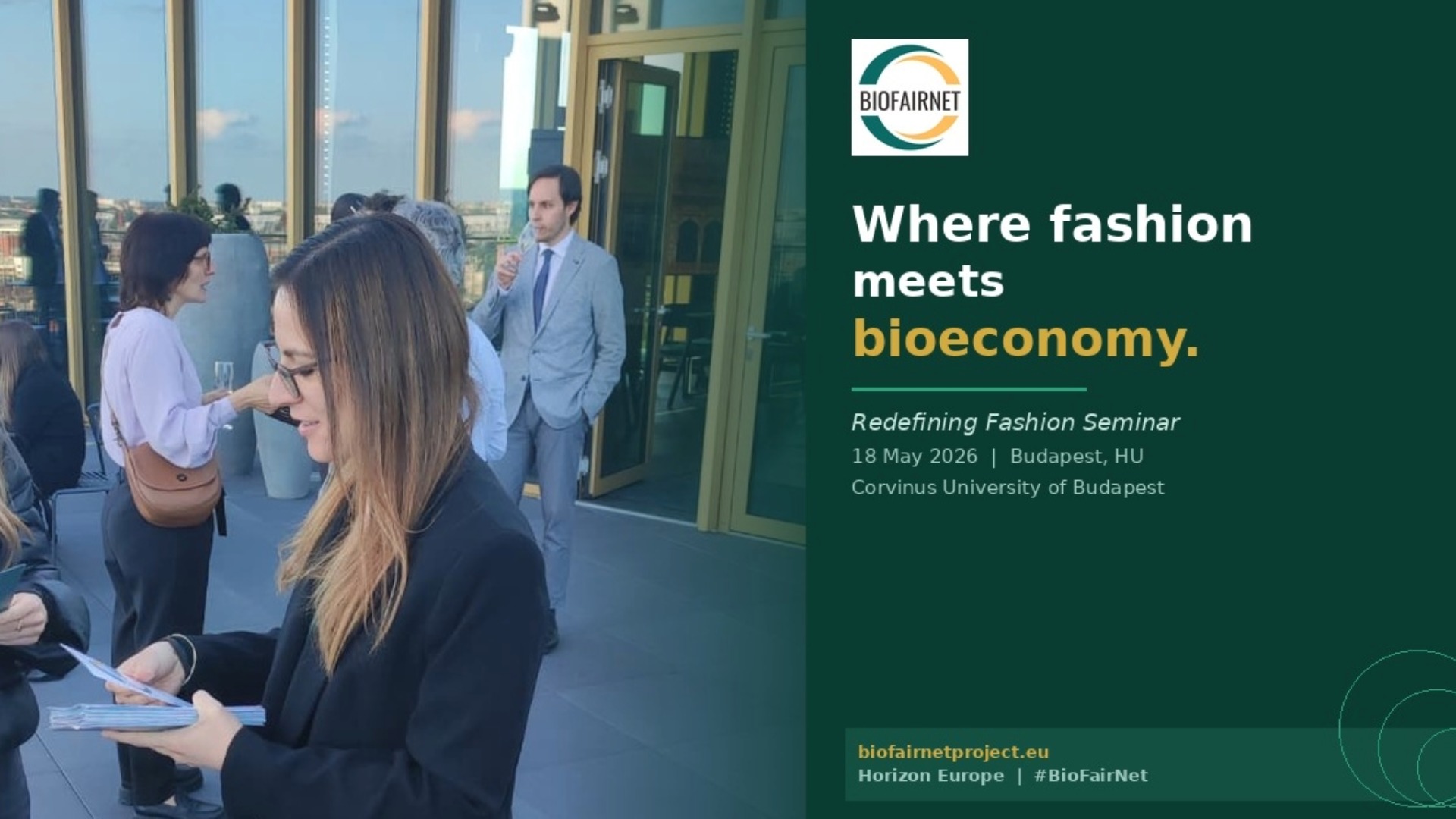
On 18 May 2026, the Gellért Campus of Corvinus University of Budapest hosted “Redefining Fashion: Leading the Transition to a Sustainable Future”: a half-day seminar co-organised by the Bioeconomy in Transition Research Group (BiT-RG) at UnitelmaSapienza, the Corvinus Institute for Advanced Studies (CIAS), and the Gellért Green project. Francesca Fieri, researcher at BioFairNet partner UnitelmaSapienza, was there and she brought BioFairNet with her.
The programme tackled some of the sharpest questions in sustainable consumption today: how do second-hand and vintage markets challenge linear fashion models? How do consumer behaviours, not just production technologies, drive or block the transition? Speakers examined circular business models, the datafication of fashion policy, and the real-world purchasing decisions of Italian and Hungarian consumers. The closing session, “Horizon Europe in Action: Current Projects & New Collaboration Opportunities,” was a direct invitation for researchers across institutions to connect their work and explore joints futurs.
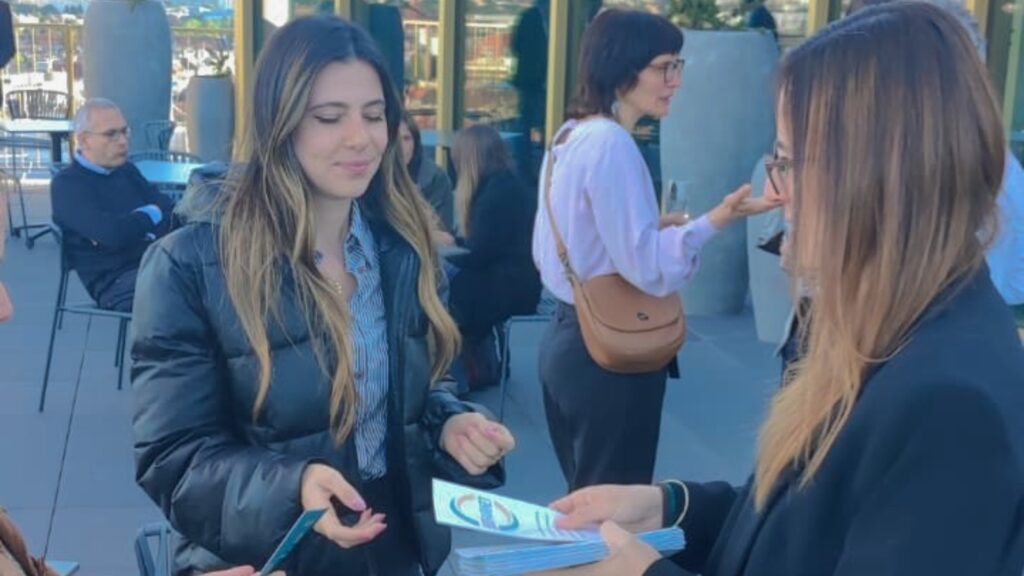
That is precisely where BioFairNet fits in. The project’s work on circular value chains, bio-based resources and sustainable business models in agriculture and mining speaks directly to the raw material and lifecycle questions that the fashion sector is only beginning to grapple with. Francesca Fieri used the event to introduce BioFairNet to researchers from UCL, the University of Ferrara, the Technical University of Berlin, Sapienza University and Corvinus, distributing project materials and sparking conversations about potential synergies.
Events like this one matter. Systemic change does not happen inside a single sector. It happens when researchers working on fashion, agriculture, bioeconomy and circular economy start talking to each other and finding the common ground they did not know they shared.