BioFairNet participated in AperiScienzaTelmica – Conoscere la Ricerca del DSGE, the annual outreach event organised by the Department of Legal and Economic Sciences (DSGE) of UnitelmaSapienza, held on 28 November 2025 in Rome. Designed to bring scientific research closer to the public, the event offered an informal and interactive setting where visitors could explore current research topics and engage directly with the university’s research groups.
As a partner of the consortium, Unitelma presented the work of its Bioeconomy in Transition Group (BiTRG), highlighting the strategic importance of the circular bioeconomy in Europe and showcasing several EUfunded initiatives, including BioFairNet.
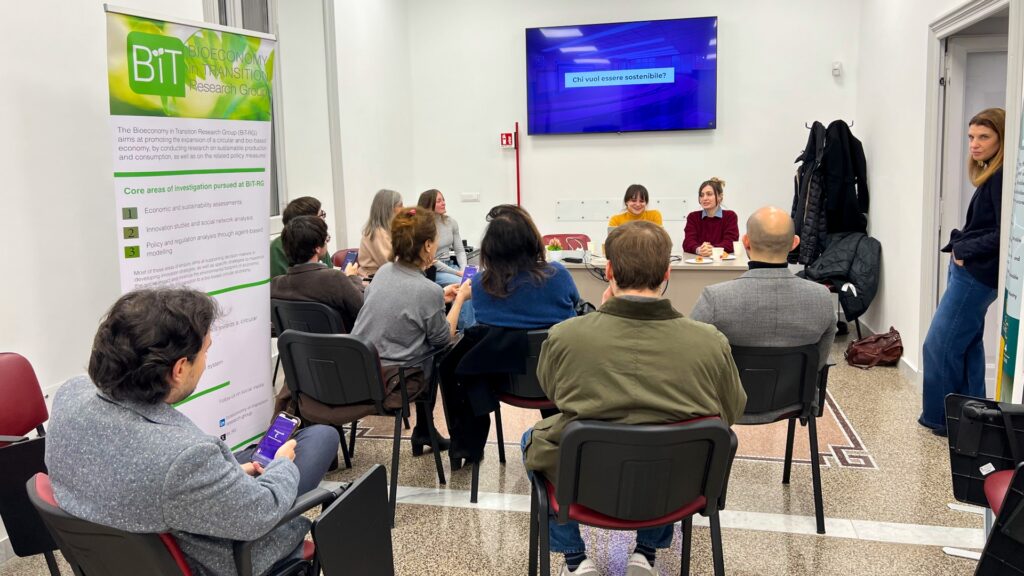
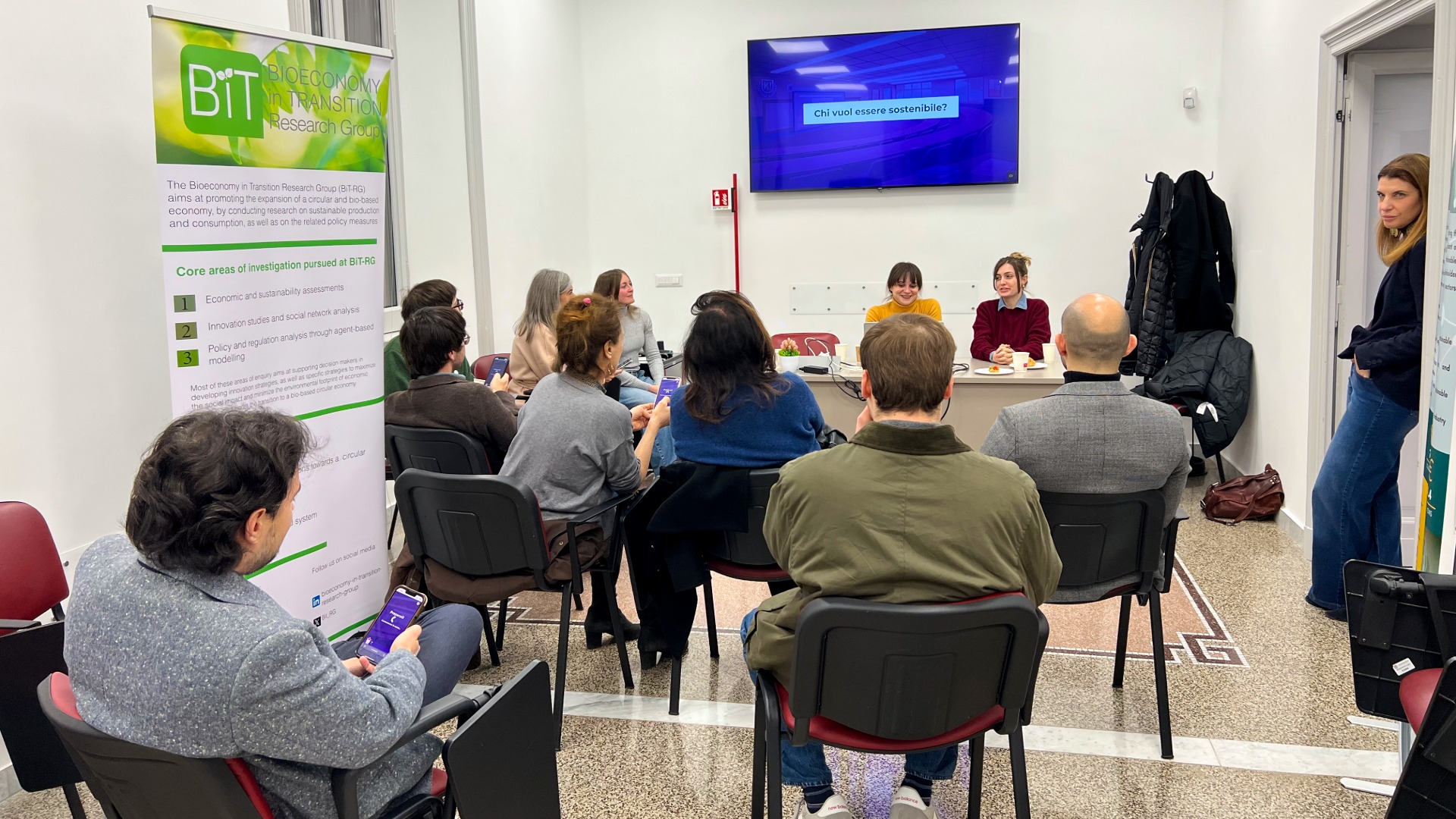
AperiScienzaTelmica included a variety of interactive activities, from sustainabilityfocused games to thematic presentations across law, economics, and technology. This multidisciplinary environment created opportunities to engage with participants interested in innovation and regional development, while the informal aperitivo encouraged open conversations and exchange.
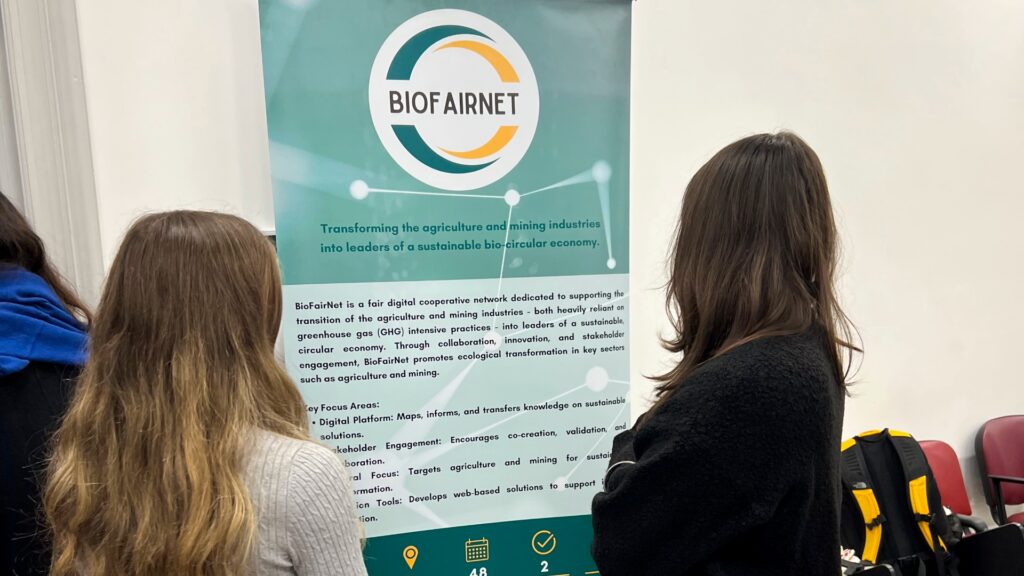
The session titled “Chi vuol essere sostenibile?” offered visitors a series of interactive tasks designed to introduce key concepts of the bioeconomy and its role as a new paradigm for sustainable living. Within this context, the BioFairNet project was presented to participants interested in understanding how biobased solutions can support Europe’s transition toward more resilient and circular regional systems.
Among the international initiatives showcased by the BiTRG, the project contributed concrete insights into how biobased approaches can support fair and resilient value chains across Europe. The event created space to present its objectives and methodologies to a diverse audience and to discuss how research can inform practical regional transitions.
Participation in AperiScienzaTelmica strengthened ongoing collaboration with UnitelmaSapienza and reinforced the consortium’s commitment to connecting research with societal needs. Engaging in events of this kind helps ensure that the project’s work remains visible, accessible, and relevant to broader discussions on the circular bioeconomy.