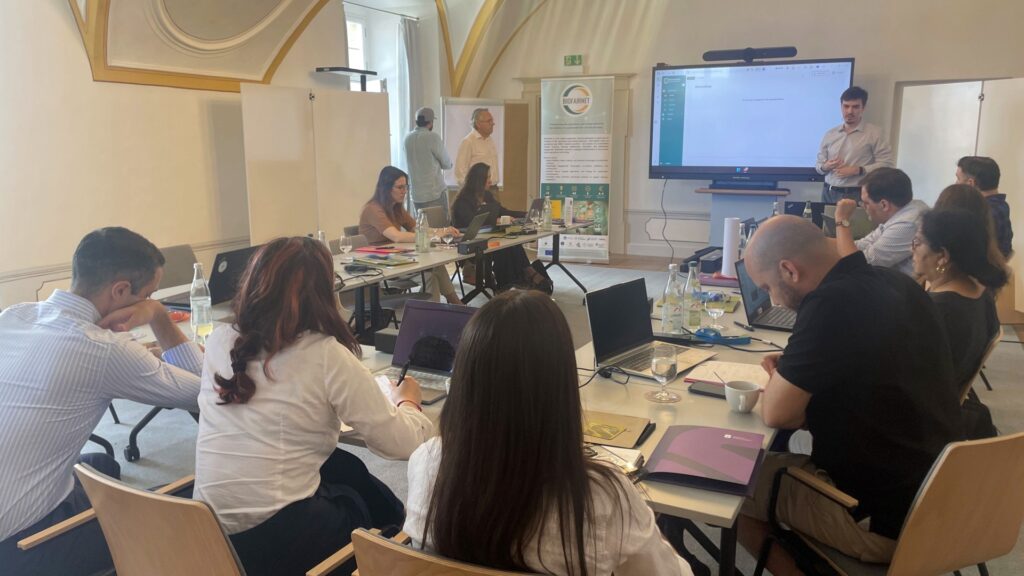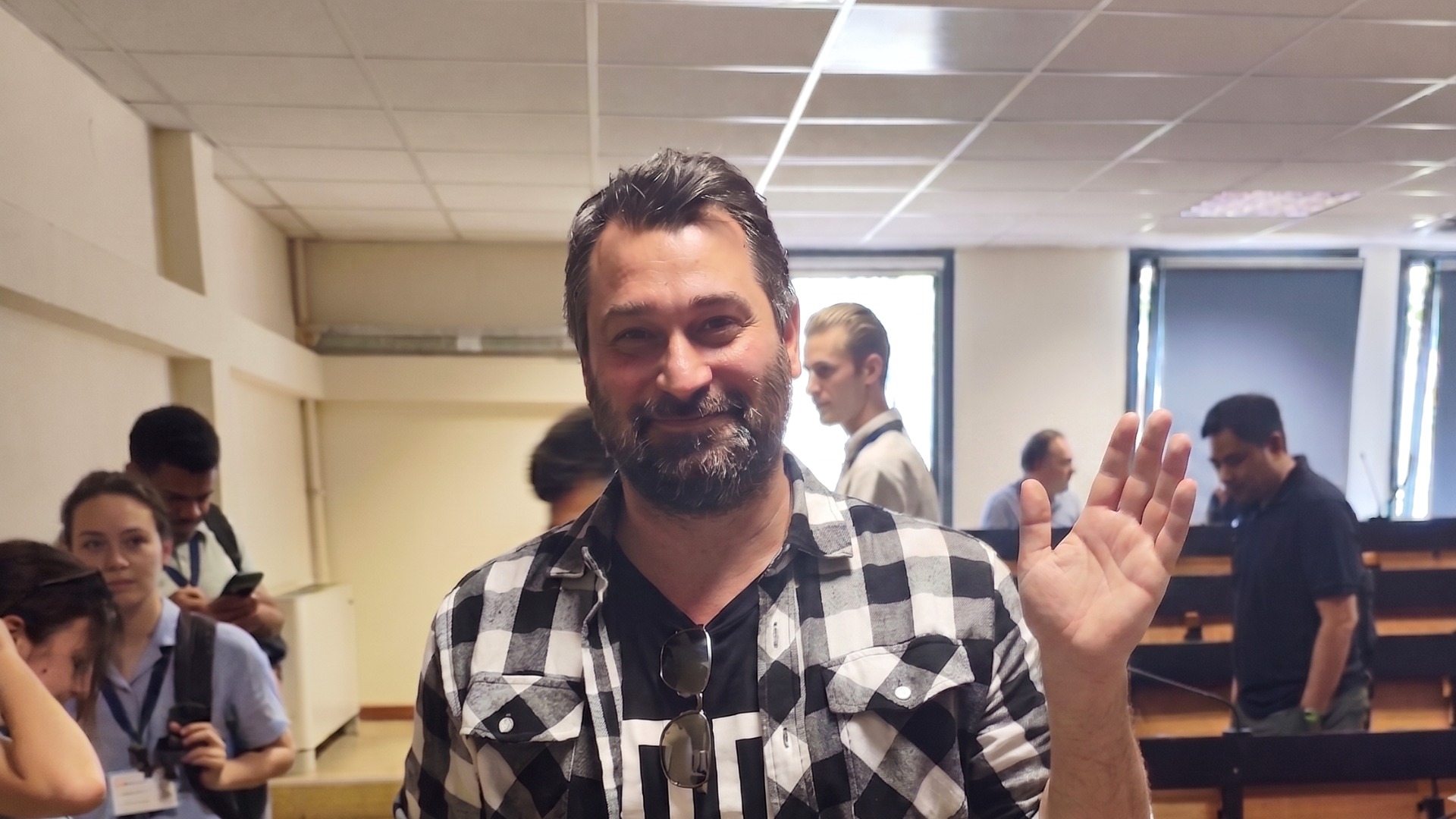
In June 2026, BioFairNet contributed to the ZeroPM Summer School in Mytilene, Lesvos, hosted by the Department of Environment of the University of the Aegean. The three-day event brought together researchers, students and policy-oriented actors working on persistent and mobile substances, including PFAS. It created a focused setting to connect scientific knowledge, policy development and technical solutions addressing emerging pollution challenges.
Exploring the role of hydrothermal treatment
As part of the programme, Assistant Professor Stergios Vakalis, from the National Technical University of Athens and the University of the Aegean, a BioFairNet partner, presented the project’s work on hydrothermal carbonisation.
This technology is also being developed within BioFairNet as part of one of the project’s pilot activities, where innovative solutions for biomass valorisation are tested in real conditions.
Hydrothermal carbonisation converts wet biomass and organic residues into useful outputs such as hydrochar, liquid fractions and gases under controlled temperature and pressure conditions. It is particularly relevant for materials that are difficult to manage using conventional thermal processes.
The presentation showed how this approach can support both value creation and environmental protection. Beyond recovering resources from agricultural and industrial side-streams, it may also contribute to the reduction or transformation of PFAS and similar persistent substances in contaminated biomass and waste streams.
A central point was the need for robust monitoring. Analytical verification is essential to track pollutant behaviour and ensure that new bio-based products remain safe and do not transfer contaminants into value chains.
Connecting bioeconomy and zero-pollution priorities
The Summer School addressed PFAS from multiple perspectives, including chemical properties, environmental and health impacts, monitoring methods, regulatory frameworks and remediation approaches.
This context closely aligns with BioFairNet’s objectives. A fair and circular bioeconomy must not only improve resource efficiency but also integrate pollution prevention and environmental safety from the outset. Biomass valorisation strategies need to be combined with tools that ensure contaminants are detected, assessed and properly managed.
Discussions in Lesvos reinforced a clear message: circularity and detoxification must go hand in hand to build trust in bio-based solutions.
Key takeaway
The work presented in Lesvos highlights a central challenge for the bioeconomy. Creating value from biomass must go together with controlling contamination risks. Technologies like hydrothermal carbonisation show how both objectives can be addressed within the same process, moving towards safer and more reliable bio-based value chains.