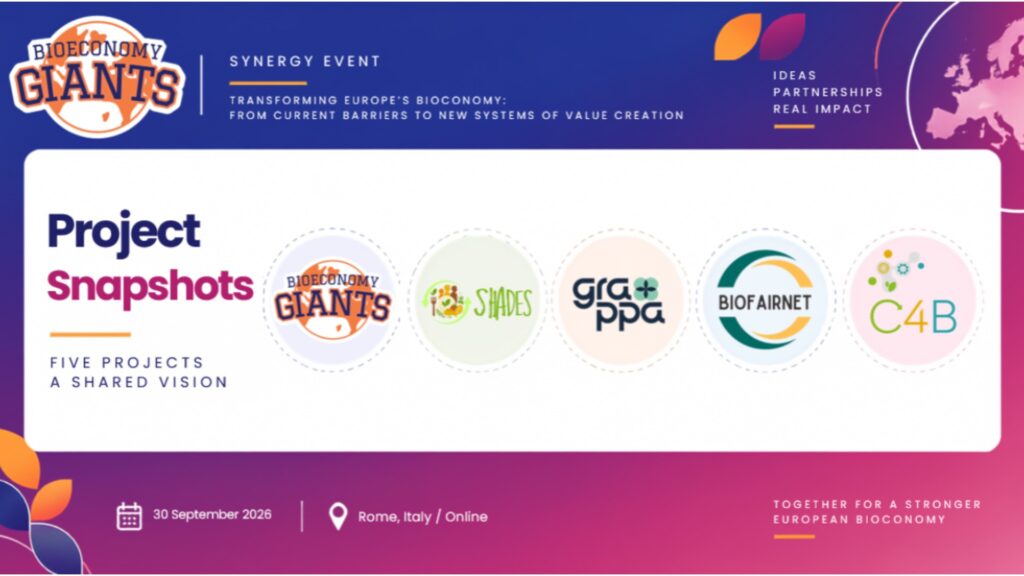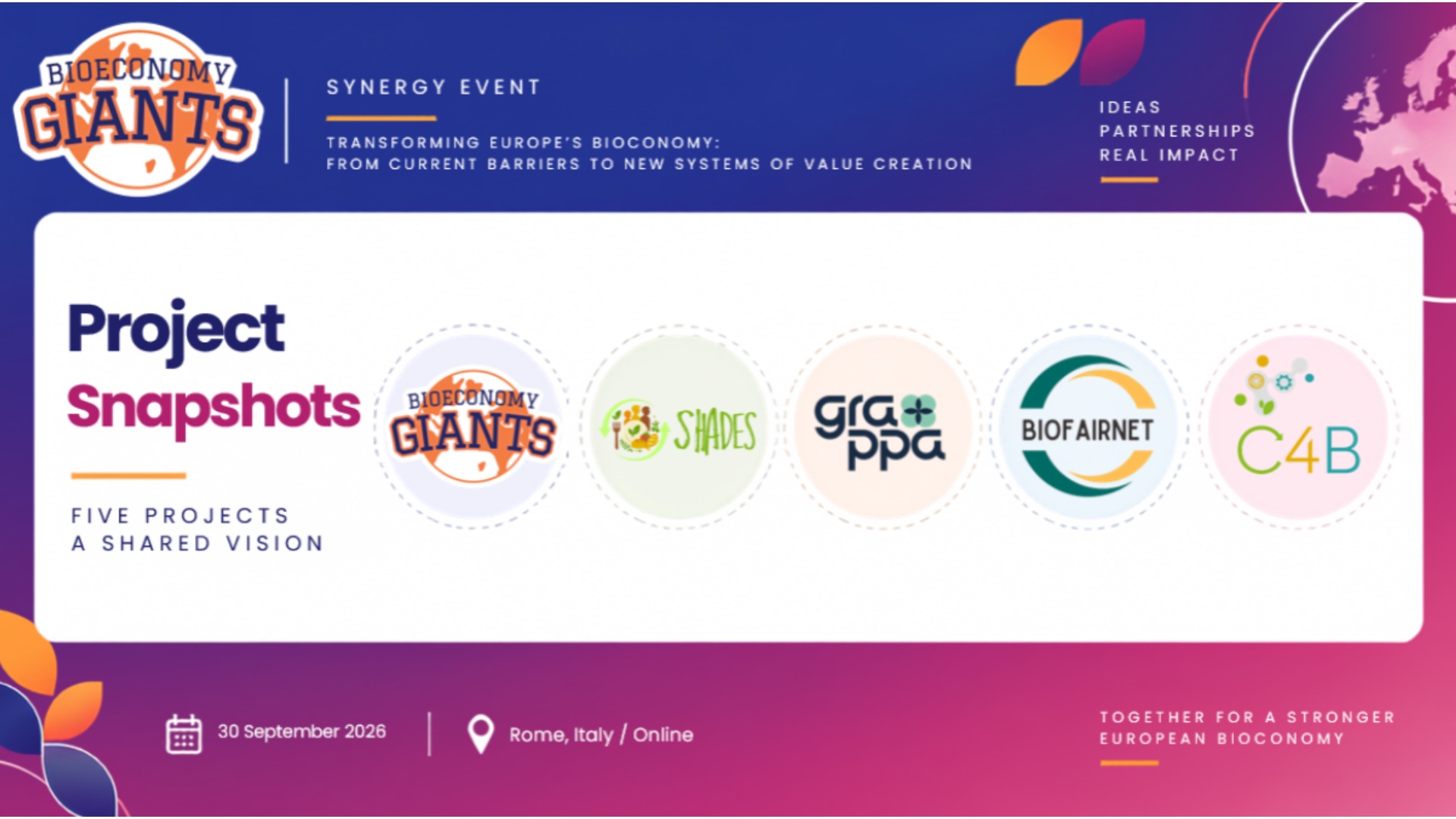
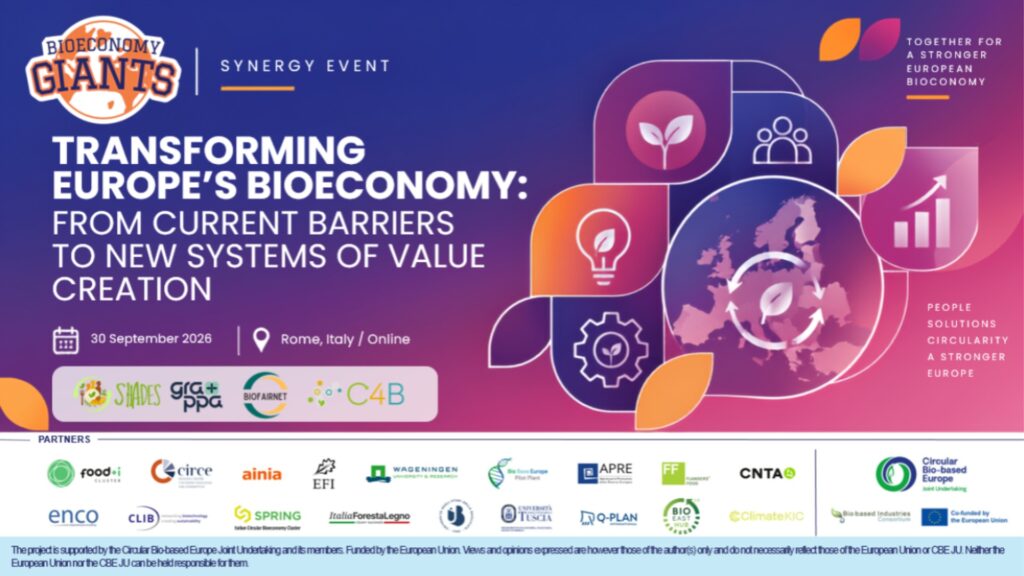
BioFairNet joined several EU-funded projects on 30 September 2026 for the hybrid synergy event “Transforming Europe’s Bioeconomy: From Current Barriers to New Systems of Value Creation”, held in Rome and organised by BIOECONOMY GIANTS.
Bringing together BioFairNet, SHADES, GRAPPA, C4B and BIOECONOMY GIANTS, the event explored how European projects are addressing barriers to the bioeconomy transition while creating new opportunities for sustainable value creation across regions and sectors.
Representing BioFairNet, project coordinator Marina Albanese from the University of Naples Federico II presented the project’s approach to supporting a fair and circular bioeconomy transition. The presentation highlighted how stakeholder engagement, co-creation, digital innovation and pilot activities can help ensure that the benefits of the transition are accessible across different territories and value chains.
From barriers to practical solutions
BioFairNet’s contribution focused on some of the challenges that continue to influence the uptake of circular and bio-based solutions across Europe. While innovation is creating new opportunities for regions and industries, barriers related to participation, access to knowledge and regional disparities can affect how these opportunities are implemented and shared.
To address these challenges, BioFairNet combines stakeholder engagement and co-creation activities with digital innovation and pilot actions. Through its pilots, the project explores ways to transform locally available residues into valuable resources while supporting the development of more resilient and sustainable value chains.
The presentation also provided an overview of the project’s progress to date and highlighted lessons emerging from activities carried out across different regions and sectors.
Looking beyond individual projects
One of the strengths of the event was the opportunity to bring together projects working on different aspects of the bioeconomy transition and explore where their experiences intersect.
Despite their different objectives and approaches, the projects shared common themes around stakeholder participation, value creation, scalability and the conditions needed for innovative solutions to move beyond demonstration activities and create broader impact.
These discussions continued during the closing roundtable, which explored how European projects can maximise their collective contribution to a stronger and more competitive bioeconomy. Participants also reflected on the evolving policy landscape, including the forthcoming Circular Economy Act and European Biotech Act II, and the opportunities for project results to contribute to future developments in the sector.
A transition that includes people and places
A message central to BioFairNet’s contribution was that successful transitions are not driven by technology alone. They also depend on the ability to involve stakeholders, respond to regional realities and create opportunities that can be shared across society.
By bringing this perspective to the discussion, BioFairNet highlighted an important dimension of Europe’s bioeconomy transformation: ensuring that the transition is not only sustainable and competitive, but also fair.
Watch the event highlights on the BIOECONOMY GIANTS LinkedIn page and follow BioFairNet to stay updated on the project’s activities and results.