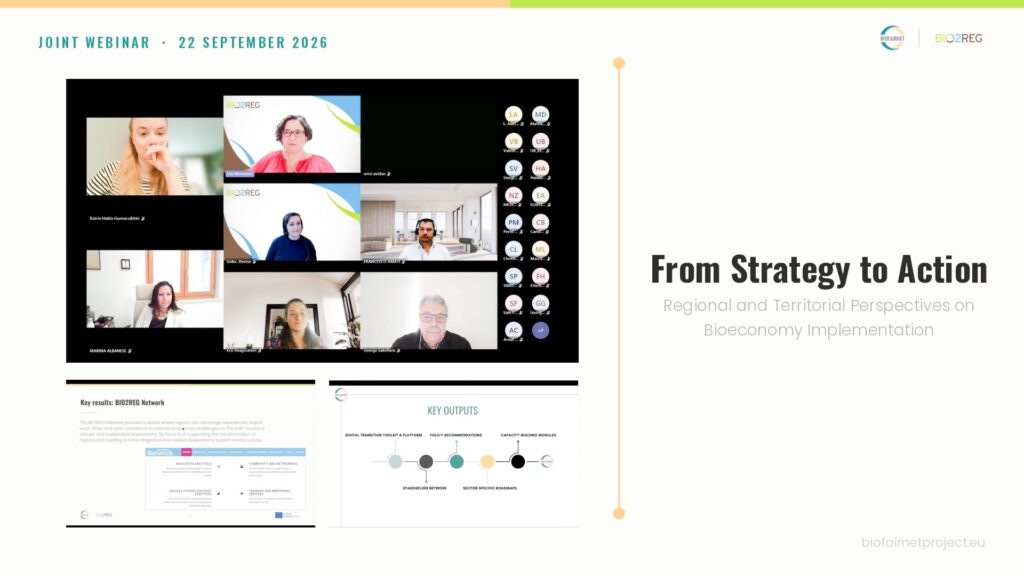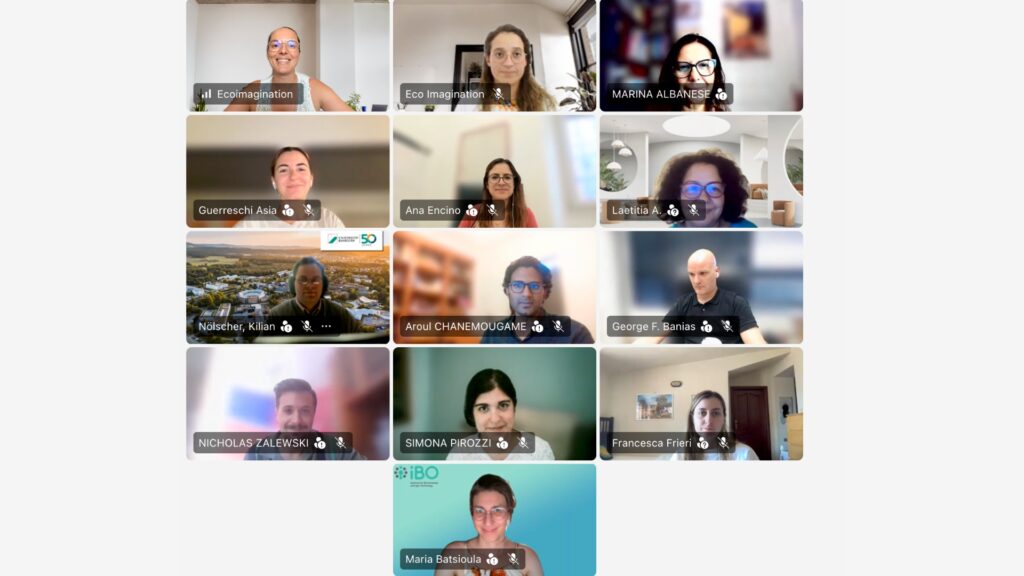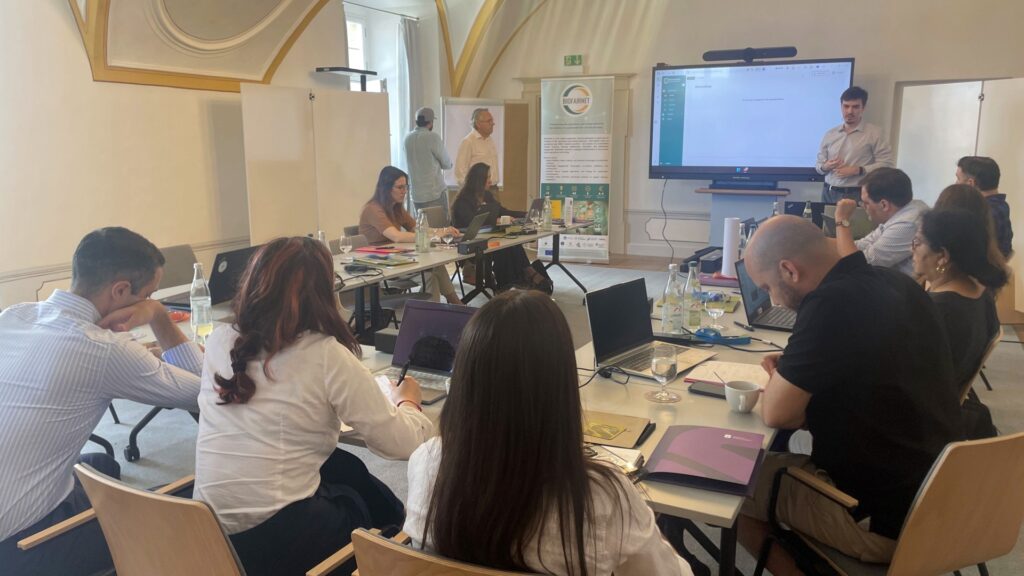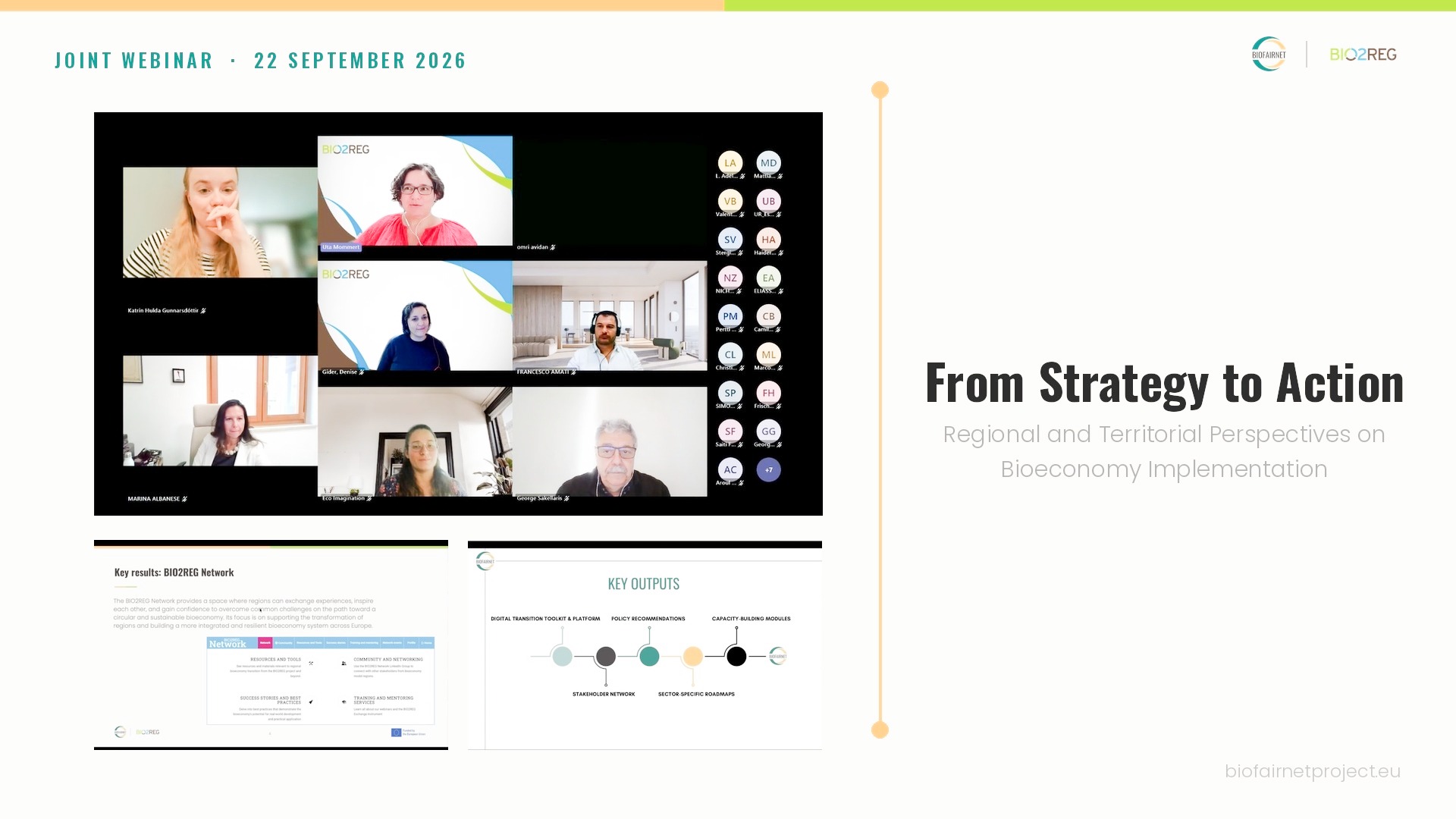
BioFairNet and BIO2REG brought experts and practitioners from six European territories together online on 22 September 2026 to show how regions are converting bioeconomy ambitions into concrete action. Nearly 50 participants joined the session to hear how it is being done, from value chains that have been running for years to pilots still being built.
The webinar opened with introductions to both projects. Uta Mommert C&D lead presented the work of BIO2REG, now in its final phase, in supporting greenhouse gas-intensive regions to become bioeconomy model regions. Marina Albanese, coordinator of BioFairNet, introduced the project’s approach, its focus on stakeholder engagement and co-creation, and the Digital Platform being developed to support a fair and circular transition.
Different Territories, Different Pathways
The first group of speakers showed how far apart the starting points can be. From Sweden, Mattias Drotz of RISE Research Institutes of Sweden presented mature forest-based value chains already producing materials, chemicals, packaging and fuels. From Iceland, Katrín Hulda Gunnarsdóttir of Matís looked back on decades spent maximising the use of fisheries resources and set out what the country’s growing aquaculture sector can take from that and what does not transfer between the two.
Transformation at the Scale of a Whole Region
Denise Gider, from Forschungszentrum Jülich and coordinator of BIO2REG, presented developments in the Rhenish Mining Area, where moving away from lignite calls for coordinated action across sectors, institutions and innovation ecosystems rather than the replacement of one technology by another. George Sakellaris and Valentina Galantari of BIOEAST Hub CZ took the same question to the scale of a macro-region, with the opportunities and the shared obstacles running across Central and Eastern Europe.
Two BioFairNet Pilots Under Development
Stergios Vakalis presented HYDROPYR, which combines hydrothermal carbonisation and pyrolysis to transform olive-mill wastewater, olive pomace and pruning residues into biocarbon for agricultural use, with renewable energy integrated into the process.
From La Réunion, Laetitia Adelard introduced a renewable hydrogen concept based on dairy and fruit residues, and was clear about the practical realities of building it on an island, from collecting feedstock that is scattered across the territory to storing the hydrogen and fitting it into the existing energy system.
One Transition, Many Realities
Across all six territories, available resources, existing infrastructure, governance models and stakeholder networks influenced the pathways being developed. Regions share common sustainability goals, yet implementation is shaped by local conditions in every case. The examples presented showed that bioeconomy implementation rests on technology and on the ability to build solutions that respond to regional realities. These are the territorial pathways the EU Bioeconomy Strategy asks regions to translate into practice.
By bringing together experiences from regions at different stages of development, BioFairNet and BIO2REG let participants follow approaches ranging from well-established industrial value chains to pilots still being built, with the opportunities, the constraints and the enabling conditions that come with each of them.
There is no single pathway to the bioeconomy transition. What decides it is understanding the local context, mobilising the right actors and creating the conditions that let sustainable solutions move from strategy to action.
Watch the full recording of the webinar here.