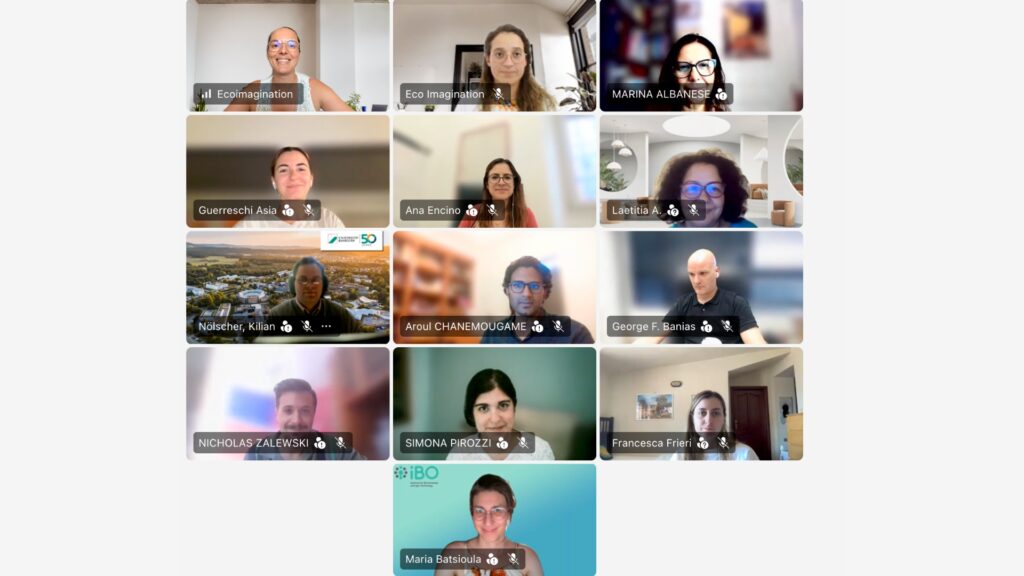
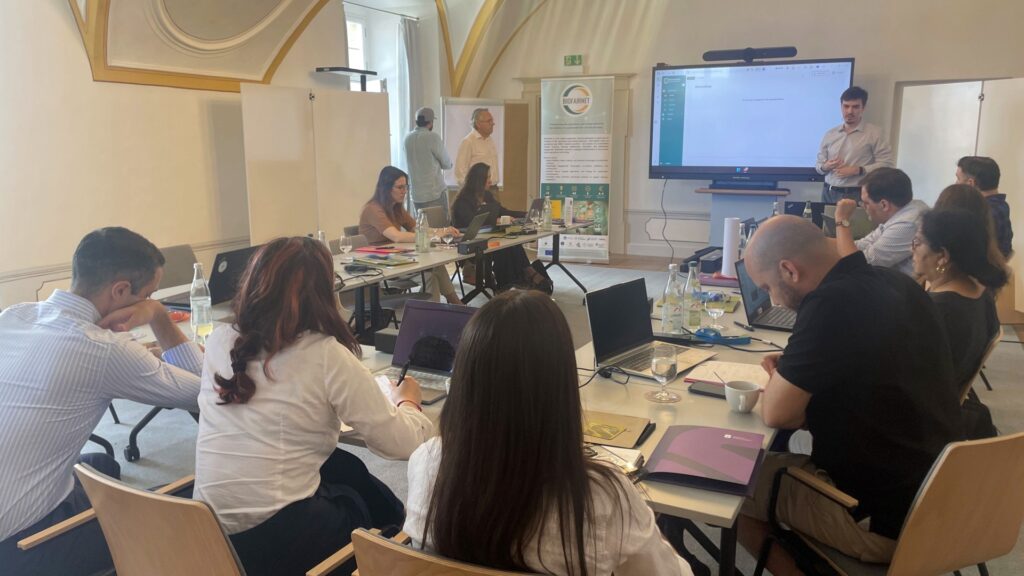
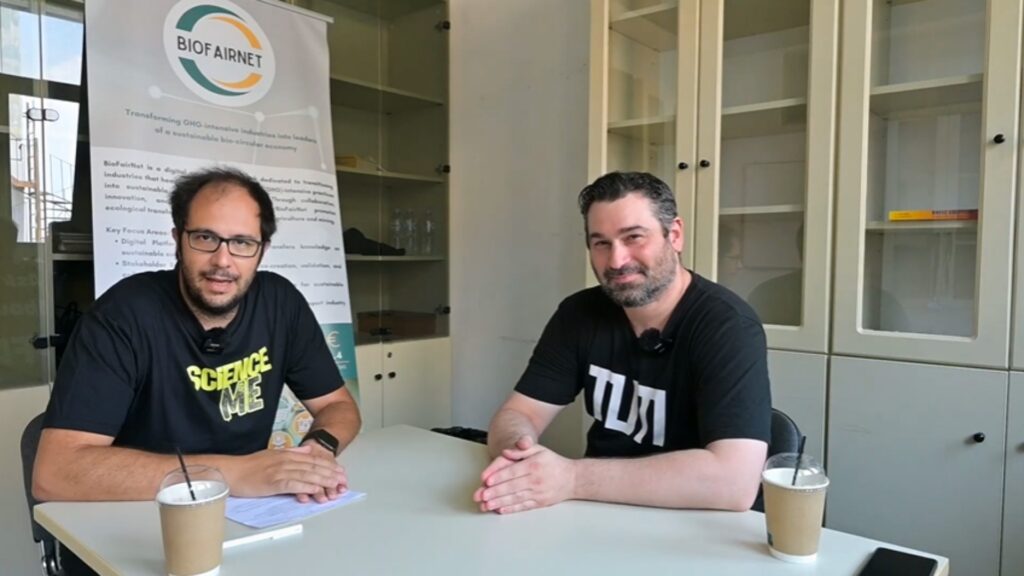
The BioFairNet project, short for “Bioeconomy and Circular Economy Fair Network”, officially launched on January 17th 2025 with a successful kick-off meeting in Naples. The project, funded by Horizon Europe and the European Commission under project number 101181568, will run from January 1, 2025, to December 31, 2028, with a total budget of 4,426,170€.
Objectives of BioFairNet
The BioFairNet project is designed to create a digital cooperative network aimed at supporting industries with high greenhouse gas (GHG) emissions, helping them transition into leaders in the bio-circular economy.
Over the next four years, BioFairNet will develop innovative tools, foster stakeholder collaboration, and deliver sustainability solutions, with a focus on the agriculture and mining sectors.
Problem Statement and Focus of the Project
Greenhouse gas-intensive industries like agriculture and mining are major contributors to environmental challenges. Transitioning these sectors to sustainable practices is essential to achieving EU climate goals for 2030 (55% reduction in emissions) and 2050 (net zero). The BioFairNet project addresses this challenge by creating pathways for these industries to adopt bio-circular economy models, integrating advanced tools and collaborative frameworks to drive ecological transformation.
The project will focus on:
- Developing a Digital Platform: To map, inform, and transfer knowledge, fostering collaboration among stakeholders.
- Transition Tools: Creating a web-based tool to help users co-create and implement sustainable practices.
- Sectoral Analysis: Providing actionable insights into current practices and pathways for a sustainable future.
- Stakeholder Involvement: Actively engaging stakeholders in co-creation, testing, and validation processes.

Kick-Off Meeting
The kick-off meeting, held on January 17, 2024, in Naples, introduced the project’s main objectives and work packages.
Key highlights included presentations on all eight work packages:
- WP1 – State-of-the-Art Analysis: Reviewing existing practices and technologies to identify key challenges and opportunities for the transition to a bio-circular economy.
- WP2 – Multidimensional Sustainability Assessment: Evaluating the environmental, social, and economic impacts of current practices and proposed solutions.
- WP3 – Information Factory for a Green and Just Transition: Developing knowledge-sharing platforms to support stakeholders in adopting sustainable practices.
- WP4 – Pilot 1: Implementing and testing bio-circular solutions in agriculture.
- WP5 – Pilot 2: Implementing and testing bio-circular solutions in the mining sector.
- WP6 – Validation and Replicability Assessments: Ensuring the scalability and adaptability of proposed solutions within and outside the Euporean Union.
- WP7 – Communication and Dissemination Plan: Promoting project outcomes and engaging stakeholders through targeted communication strategies.
- WP8 – Project Management and Financial Aspects: Ensuring effective coordination, resource allocation, and quality assurance throughout the project.
The agenda also included a roundtable discussion and a session on stakeholder experience-sharing, which emphasized co-creation and collaboration as central pillars of the project.
About the BioFairNet Partners
Led by Università degli Studi di Napoli Federico II in Italy, the BioFairNet consortium includes 12 partners from Italy, Germany, Spain, Greece, France, Canada, and Kenya:
- Università degli Studi di Ferrara, Italy
- Università degli Studi di Roma Unitelma Sapienza, Italy
- Universität Bayreuth, Germany
- Sistemas Avanzados de Tecnología S.A., Spain
- Ethniko Kentro Erevnas Kai Technologikis Anaptyxis, Greece
- Association ECO Imagination, France
- Panepistimio Aigaiou, Greece
- Sustainability Solutions Group Workers Cooperative, Canada
- The Co-operative University of Kenya, Kenya
- Université de La Réunion, France
- Università degli Studi di Trento, Italy
- Universität zu Köln, Germany
This diverse team will collaborate to achieve the project’s ambitious goals and contribute to a more sustainable and equitable global economy.

About the Horizon Europe Programme
Horizon Europe is the EU’s flagship funding program for research and innovation. It addresses global challenges such as climate change and supports initiatives to achieve the UN Sustainable Development Goals. The program facilitates collaboration and promotes industrial competitiveness, driving impactful research that strengthens the European Research Area. For more information about BioFairNet and upcoming project developments, please contact the Support Office at biofairnet@unina.it.