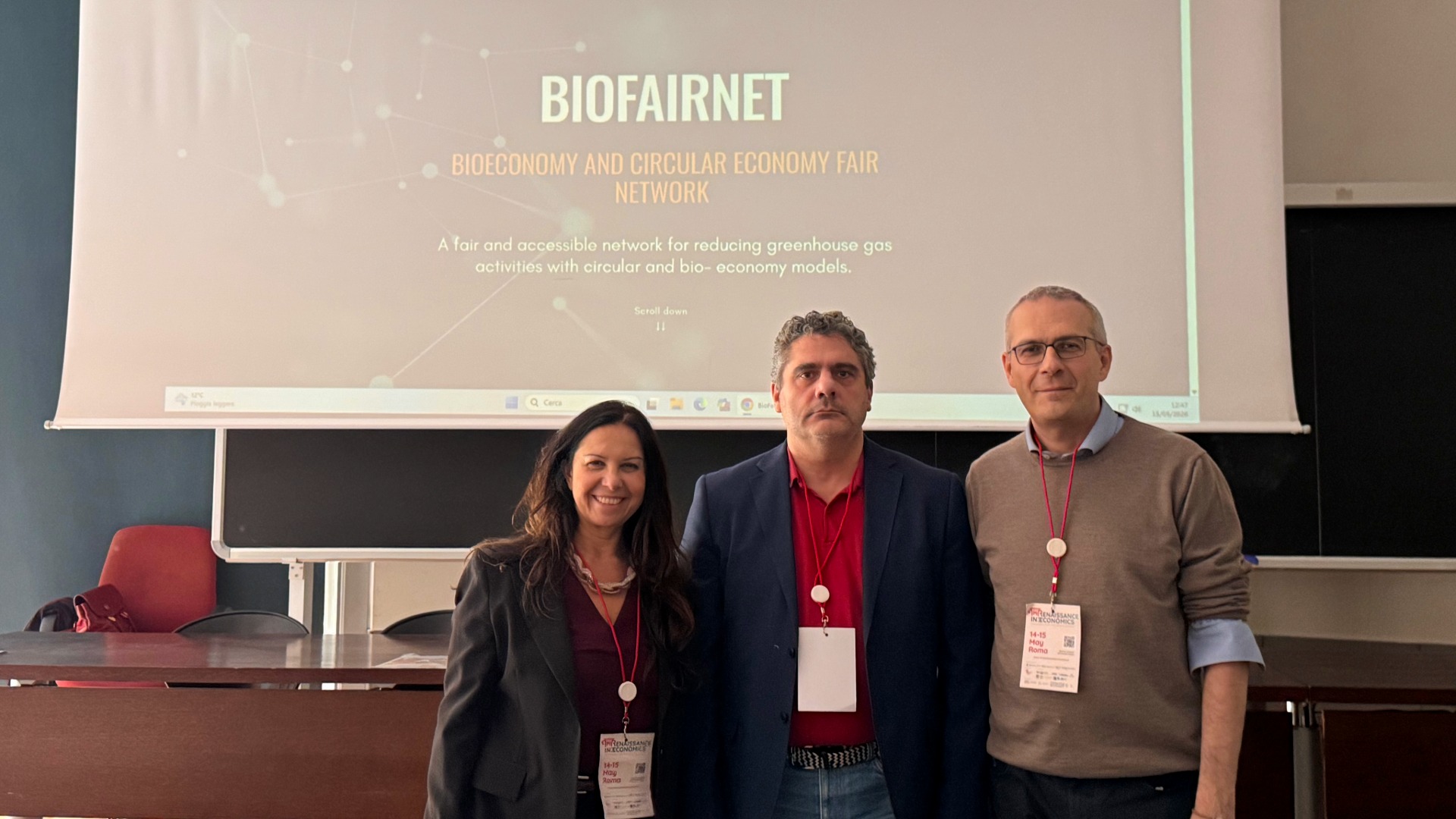
On 14–15 May 2026, the BioFairNet project took part in the “Renaissance in Economics” International Conference, held in Rome. The event focused on how economic thinking can respond to today’s global challenges, including climate transition and social inequalities.
BioFairNet was represented at the conference by Marina Albanese, Project Coordinator and Professor of Economic Policy at the University of Napoli Federico II (UNINA), who contributed as a keynote speaker and took part in the semi-plenary round table “Economics and Management in Dialogue: Building a Common Agenda for Societal Impact and Sustainable Competitiveness.” This contribution supported interdisciplinary dialogue on how economic and management approaches can address complex societal challenges.
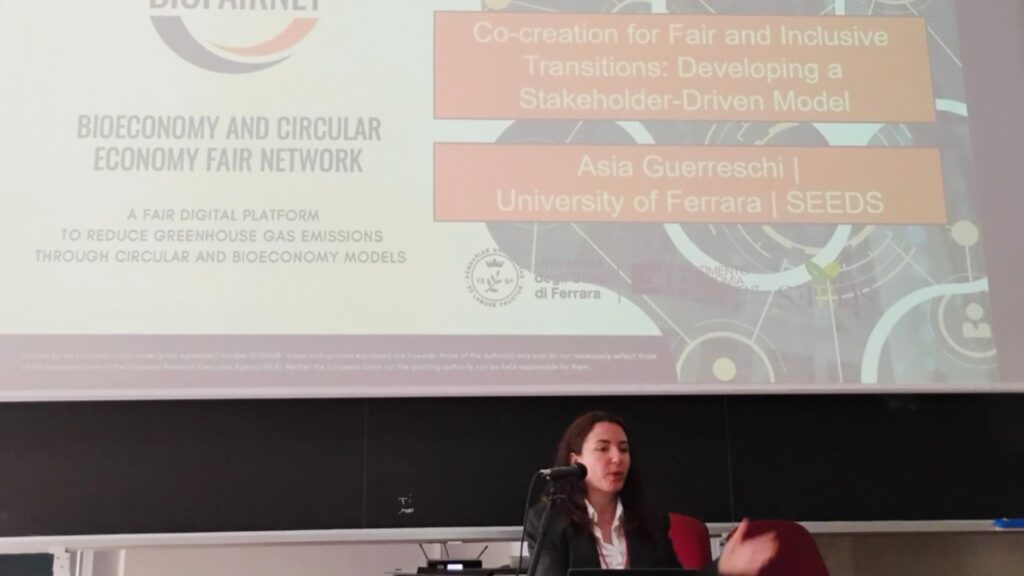
The project’s presence was further reflected through contributions from across the consortium. Ermanno Tortia (Università degli Studi di Trento) contributed with research on the role of multi-stakeholder social economy organisations in advancing the circular economy, while Asia Guerreschi (University of Ferrara – UNIFE) addressed co-creation and stakeholder-driven approaches to support fair and inclusive transitions. Massimiliano Mazzanti (University of Ferrara – UNIFE) also attended the conference, reinforcing the project’s engagement within the academic community.
During the event, Marina Albanese was also interviewed by the organisers, further highlighting BioFairNet’s perspective on sustainability and economic transformation.
Within the broader discussions, BioFairNet emphasised how value is created and distributed in bio-based systems, underlining the importance of fairness, transparency, and sustainability in shaping future economic models. These perspectives are particularly relevant in the transition to a circular and bio-based economy, where environmental performance and social equity must be considered alongside competitiveness.
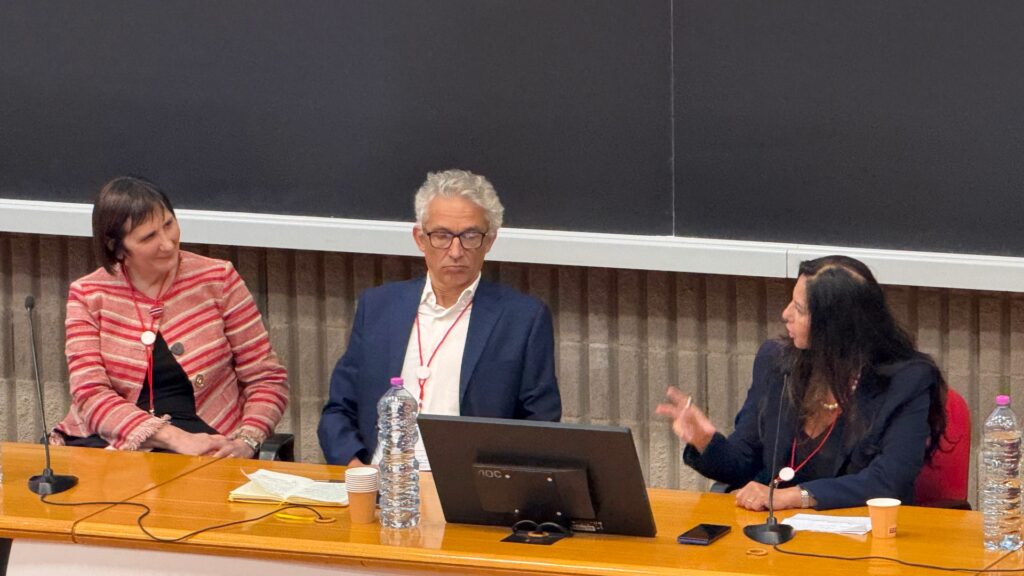
The conference also provided a valuable opportunity to engage with the wider academic and policy community, reinforcing the importance of interdisciplinary exchange in addressing complex global challenges. Participation in this exchange further strengthens BioFairNet’s contribution to advancing more sustainable, inclusive, and responsible economic systems.