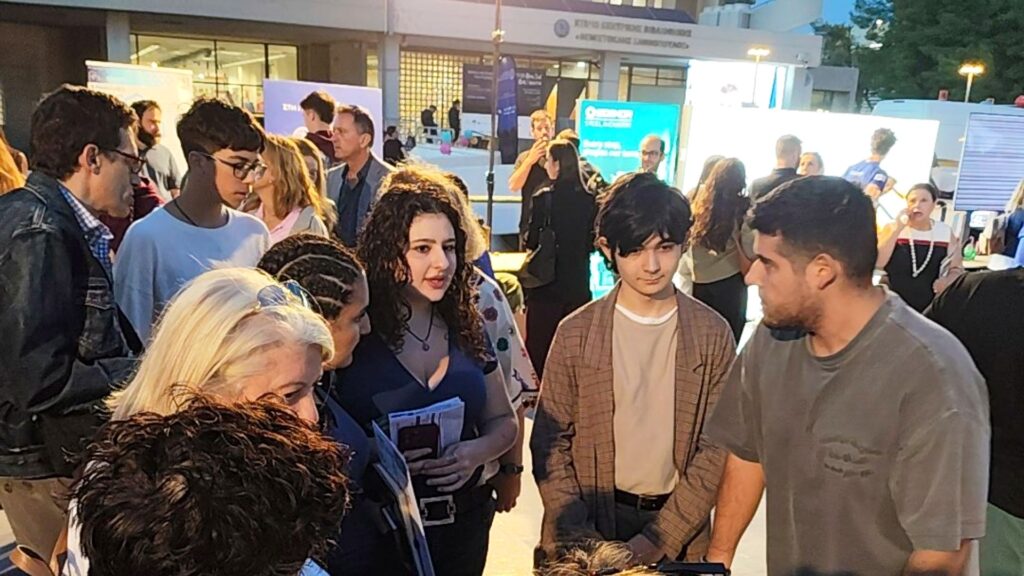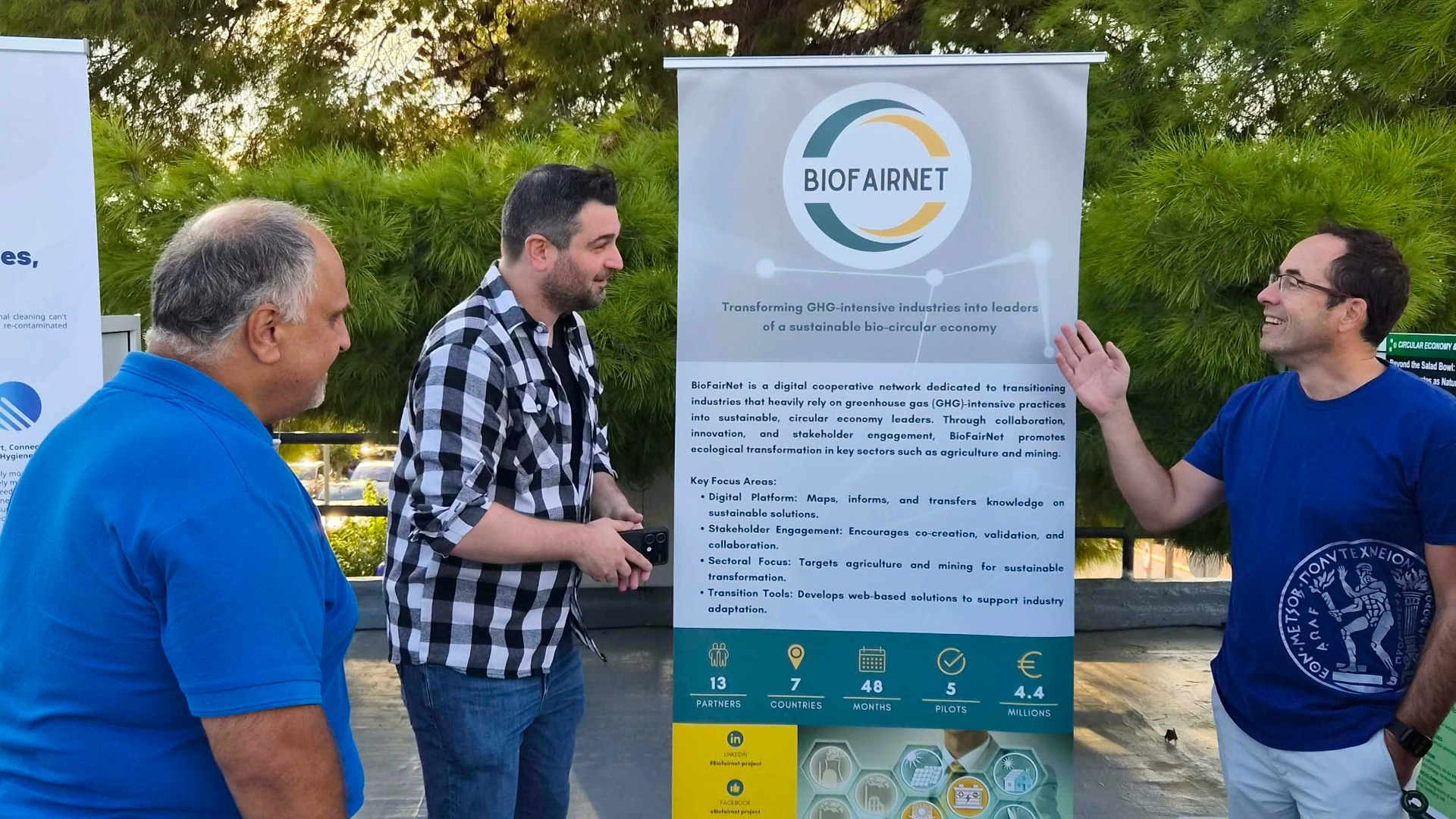
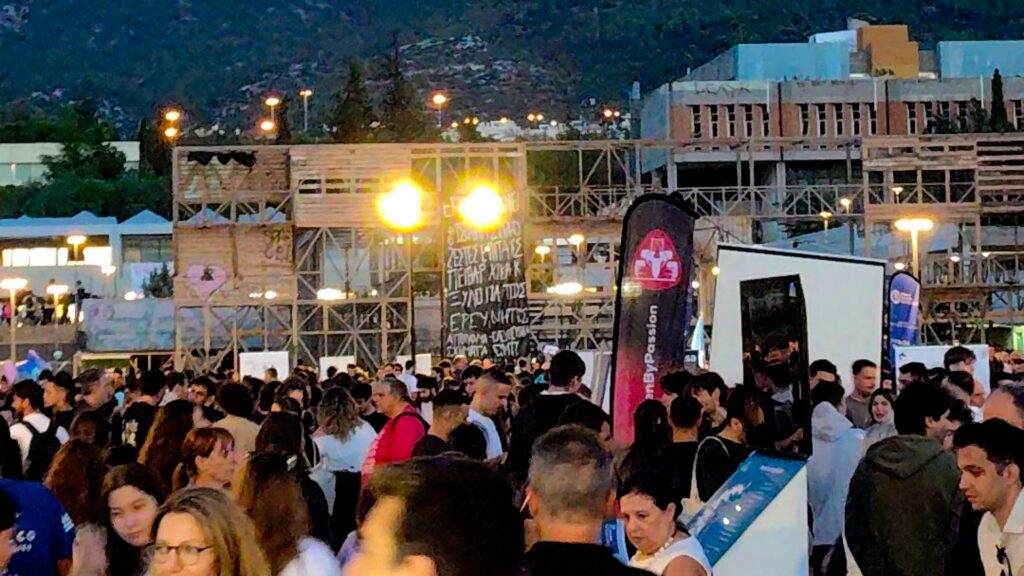
On 25 September 2026, BioFairNet participated as an exhibitor at the Circular Economy & Bioeconomy Festival (CEBF), held within the framework of the European Researchers’ Night at the National Technical University of Athens (NTUA). The festival brought together researchers and visitors of all ages to discover how scientific research is contributing to more sustainable and circular ways of producing, consuming and managing resources.
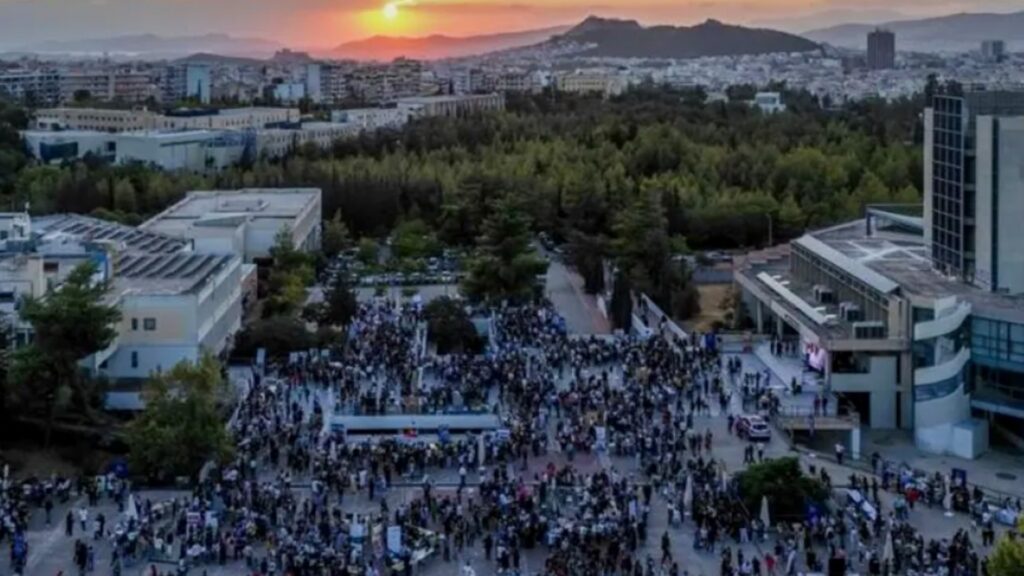
For BioFairNet, the event offered an opportunity to move beyond the laboratory and showcase the work being carried out within the HYDROPYR pilot to a wider audience.
Bringing circular solutions closer to the public
Held in NTUA’s central open square, the festival featured research teams working on topics ranging from biomass and waste valorisation to biotechnology, sustainable materials and environmental technologies. Visitors were able to move freely between stands, engage directly with researchers and explore real examples of how circular economy principles can be applied in practice.
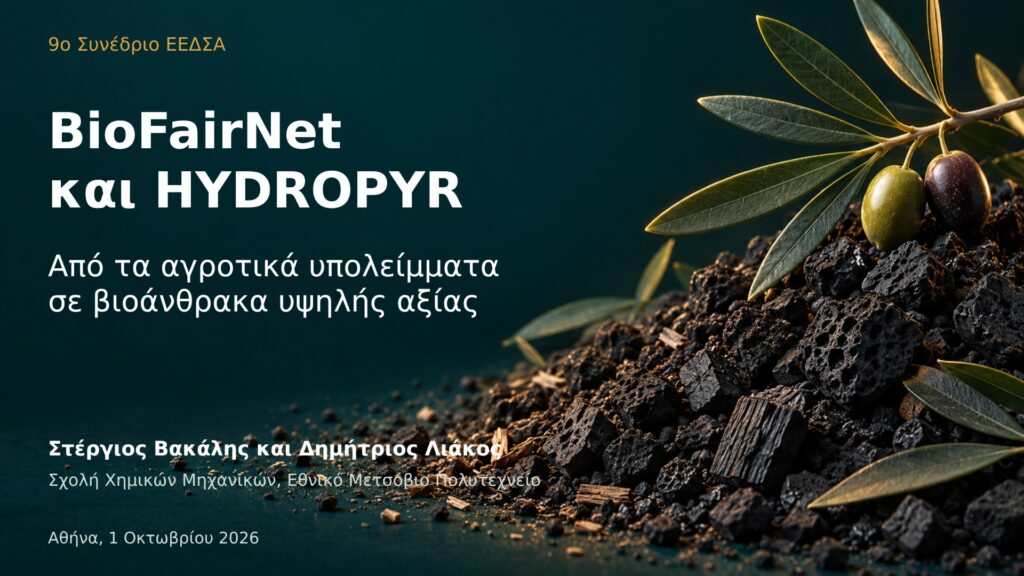
The BioFairNet stand focused on the HYDROPYR concept, an innovative approach that combines hydrothermal carbonisation and pyrolysis with solar energy to transform agricultural residues and organic waste into valuable products.
From agricultural residues to valuable resources
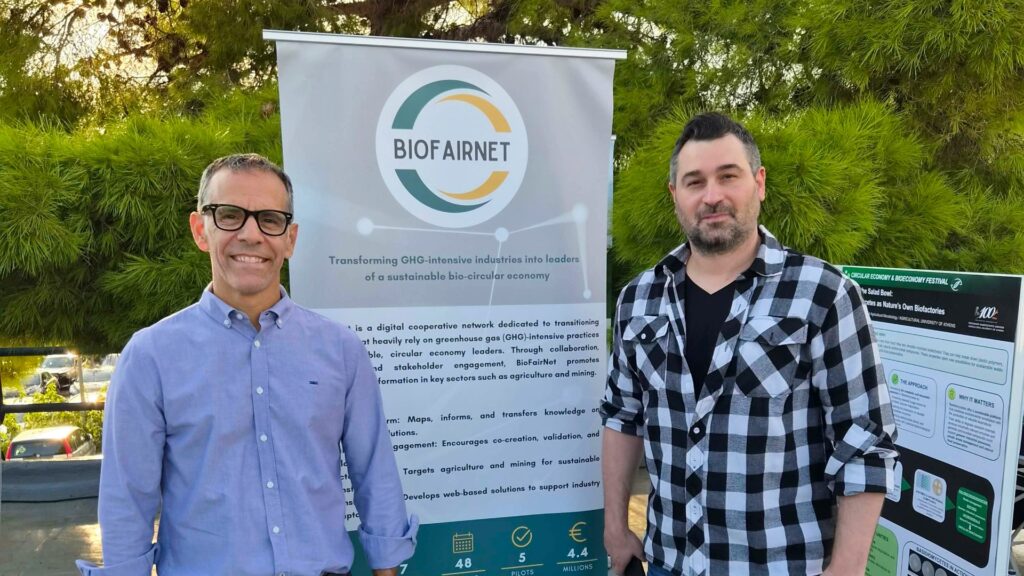
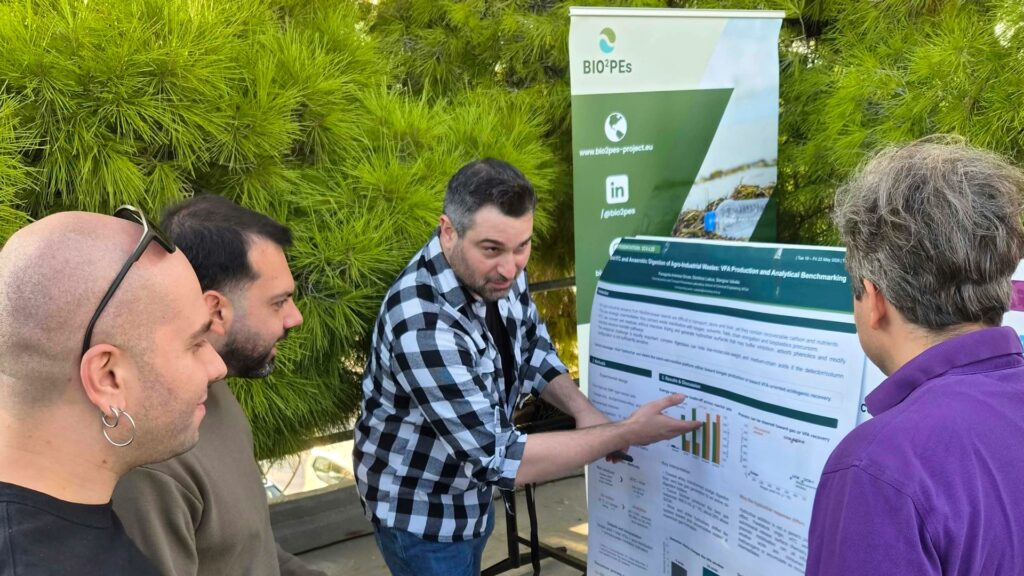
Representing BioFairNet, Professor Stergios Vakalis introduced visitors to the project’s objectives and to the development of the HYDROPYR pilot. Alongside him, doctoral researcher Dimitrios Liakos presented a range of materials produced through ongoing experimental work, including hydrochar, biochar and liquid products containing volatile fatty acids (VFAs).
By displaying these materials side by side, visitors could see first-hand the different outputs that can be recovered from biomass and organic residues. The samples quickly became a starting point for discussions about circular economy solutions, resource recovery and potential applications.
A dedicated poster explaining the production and recovery of valuable products complemented the exhibition, alongside BioFairNet communication materials.
Connecting research and society
One of the most valuable aspects of the festival was the opportunity to discuss research directly with the public. Visitors asked how these processes work and where the products could be used, showing how bio-based technologies can create new value from materials that are often considered waste.
For BioFairNet, participation in the festival reinforced the importance of making research accessible and engaging wider audiences in conversations about the bioeconomy transition. Events such as the Circular Economy & Bioeconomy Festival help bridge the gap between laboratory research and real-world applications, showing how innovative approaches can support more sustainable and circular systems.
BioFairNet would like to thank the organisers of the Circular Economy & Bioeconomy Festival and the European Researchers’ Night at NTUA, as well as everyone who visited the stand and contributed to the discussions.