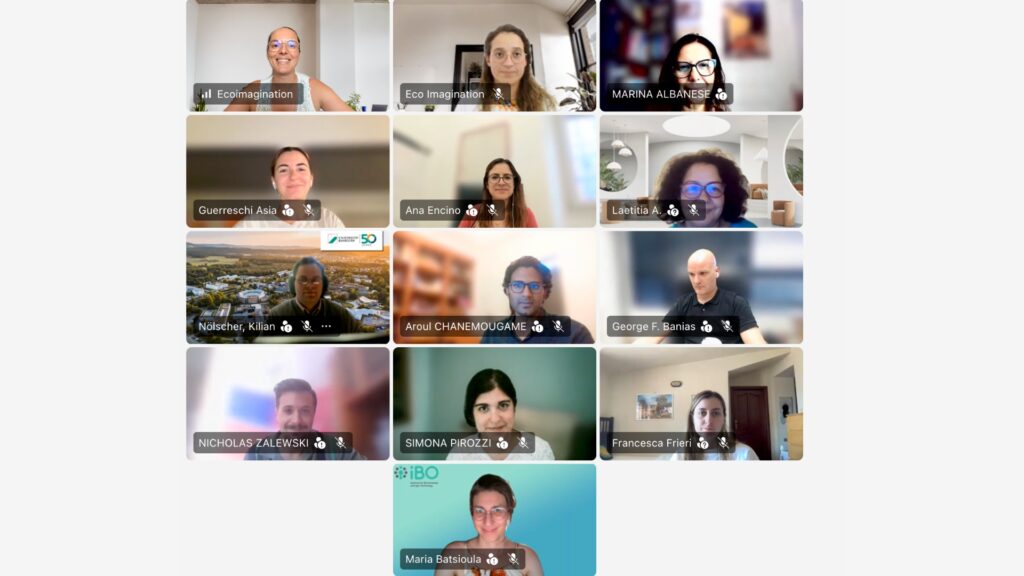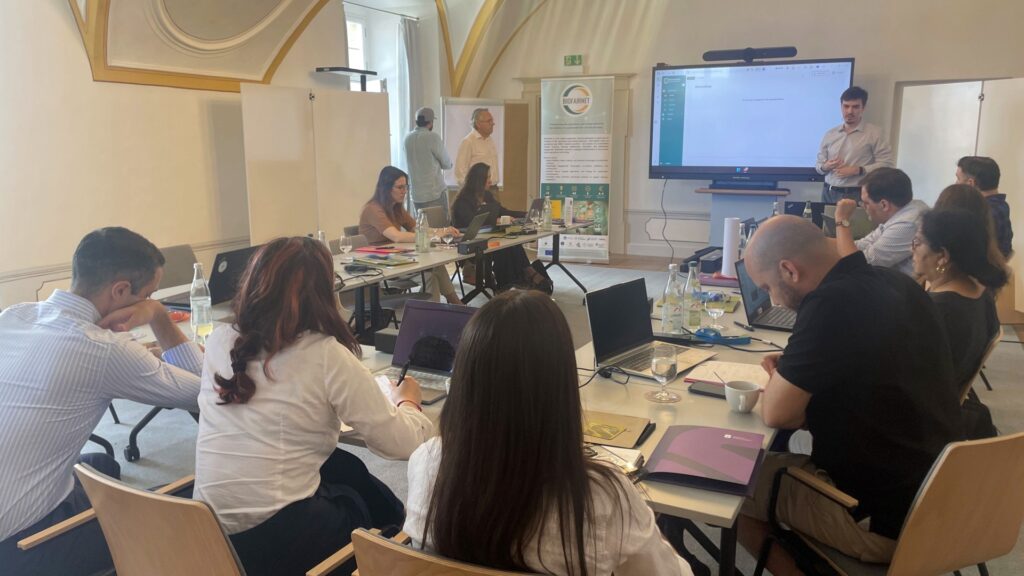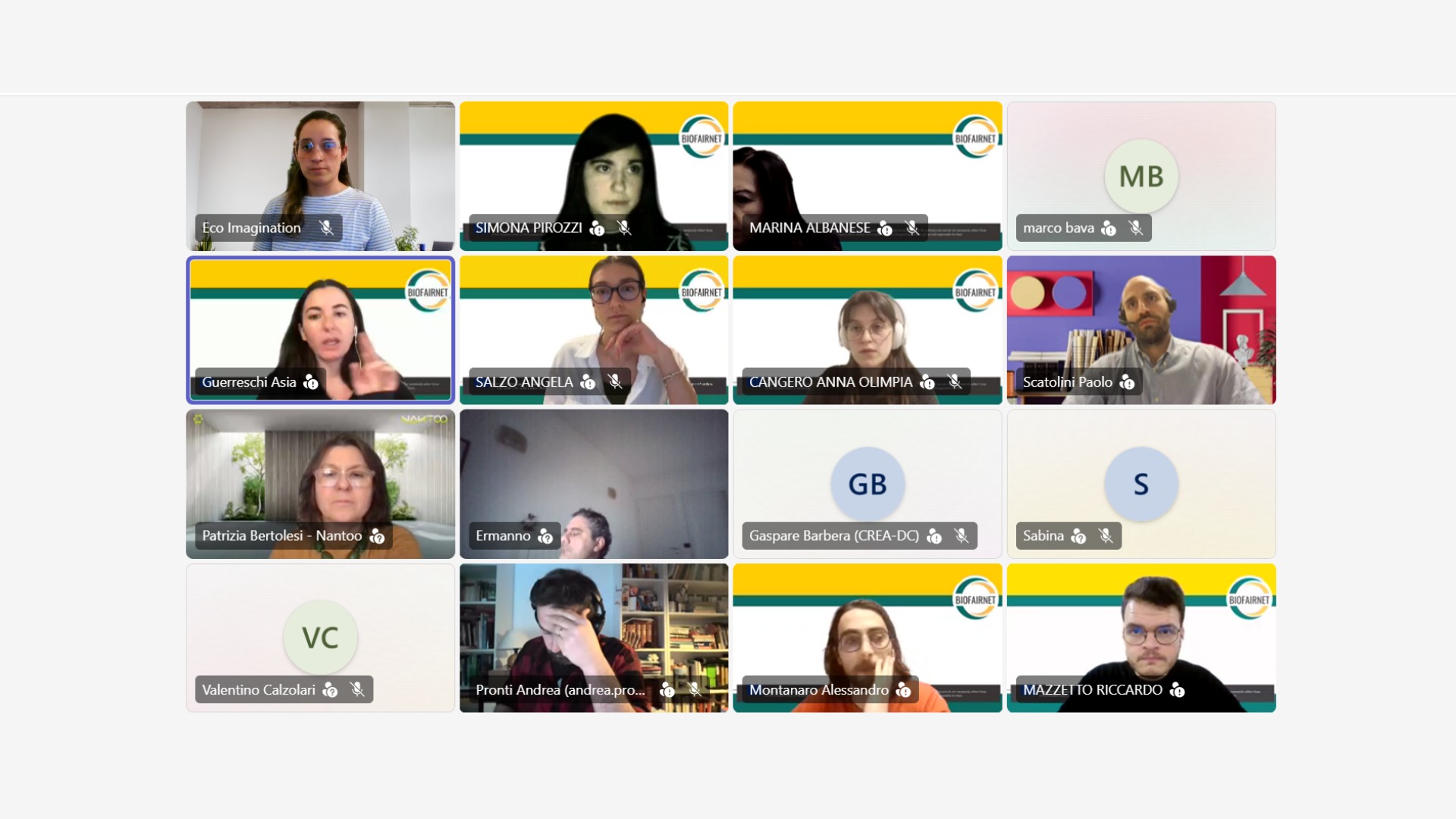
On 26 February 2026, BioFairNet held its Italian Regional Stakeholder Workshop, an online session dedicated to understanding the needs and priorities of the country’s agricultural sector. Over 37 participants joined the discussion, contributing insights that will guide the development of the BioFairNet digital platform.
The workshop opened with an introduction by Marina Albanese, Project Coordinator, followed by Asia Guerreschi, Researcher at the Università degli Studi di Ferrara, partner of BioFairNet and responsible for the Online Regional Workshops. Together, they set the tone for an afternoon focused on practical challenges, shared experiences, and the future of fair digitalisation in agriculture.
A dynamic exchange across rotating discussion tables
Participants moved into rotating discussion tables, each centered on a guiding question. This format created a lively and collaborative environment where farmers, cooperatives, public service providers, and thirdsector organisations could compare experiences and reflect on their transition toward circular and biobased practices.
Across the conversations, a common picture emerged. Many agricultural actors described how circularity is already part of their daily routines, reusing byproducts, integrating activities, shortening supply chains, or reducing waste through small operational efficiencies. Public service providers also shared examples from their own work, while noting that some areas, such as water reuse, remain economically and culturally challenging.
As perspectives shifted from table to table, participants spoke openly about what helps them move forward: strong territorial networks, growing consumer interest in sustainability, and the natural resources that many rural areas still offer. At the same time, they highlighted persistent barriers, including limited digital skills, complex logistics in remote areas, bureaucratic hurdles, rigid regulations, and a lack of practical tools, especially in the public sector. Many also emphasised the need for more training and stronger institutional support.
Imagining the BioFairNet digital platform
In the final part of the workshop, participants explored what a future BioFairNet platform should offer. Rather than listing technical features, they outlined a shared vision: a practical, accessible, and userfriendly tool that supports collaboration, connects rural and urban actors, simplifies access to information, and strengthens digital capacity across the agricultural sector. Above all, they stressed that the platform should empower users and evolve based on collective priorities.
Towards a fair and connected bioeconomy
The workshop confirmed that digitalisation in agriculture must be codesigned with those who work the land and sustain rural communities. Their insights form the foundation of the BioFairNet approach. As the project moves forward, the future platform aims to become a shared space where needs, knowledge, and solutions meet, supporting a fair and resilient transition for all regions.