The transition from waste management to resource recovery was at the centre of the 9th Conference of the Hellenic Solid Waste Management Association (EEDSA), held on 1 and 2 October 2026 at the National Technical University of Athens (NTUA) under the theme “Circular Cities 2030: From Planning to Implementation”.
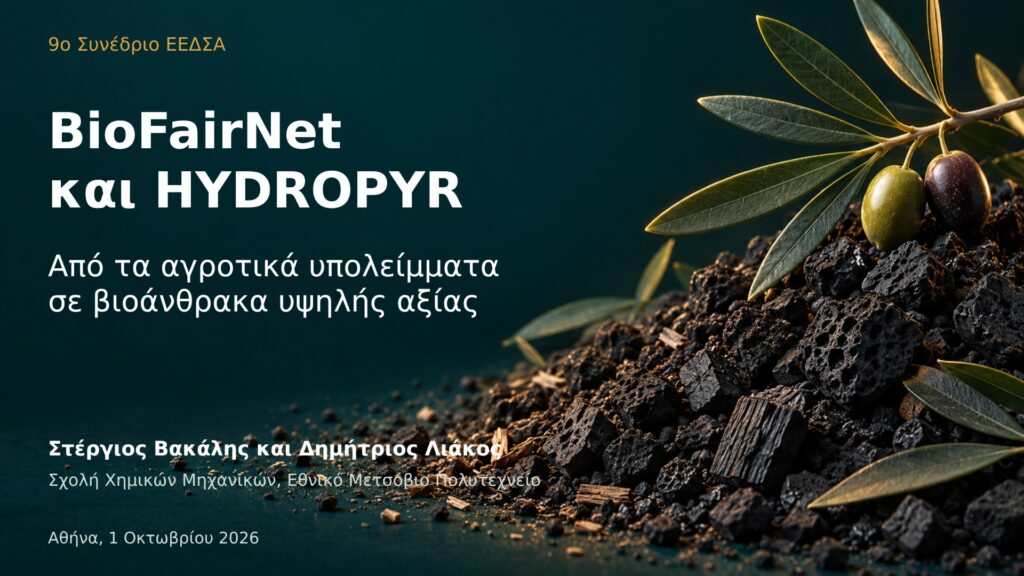
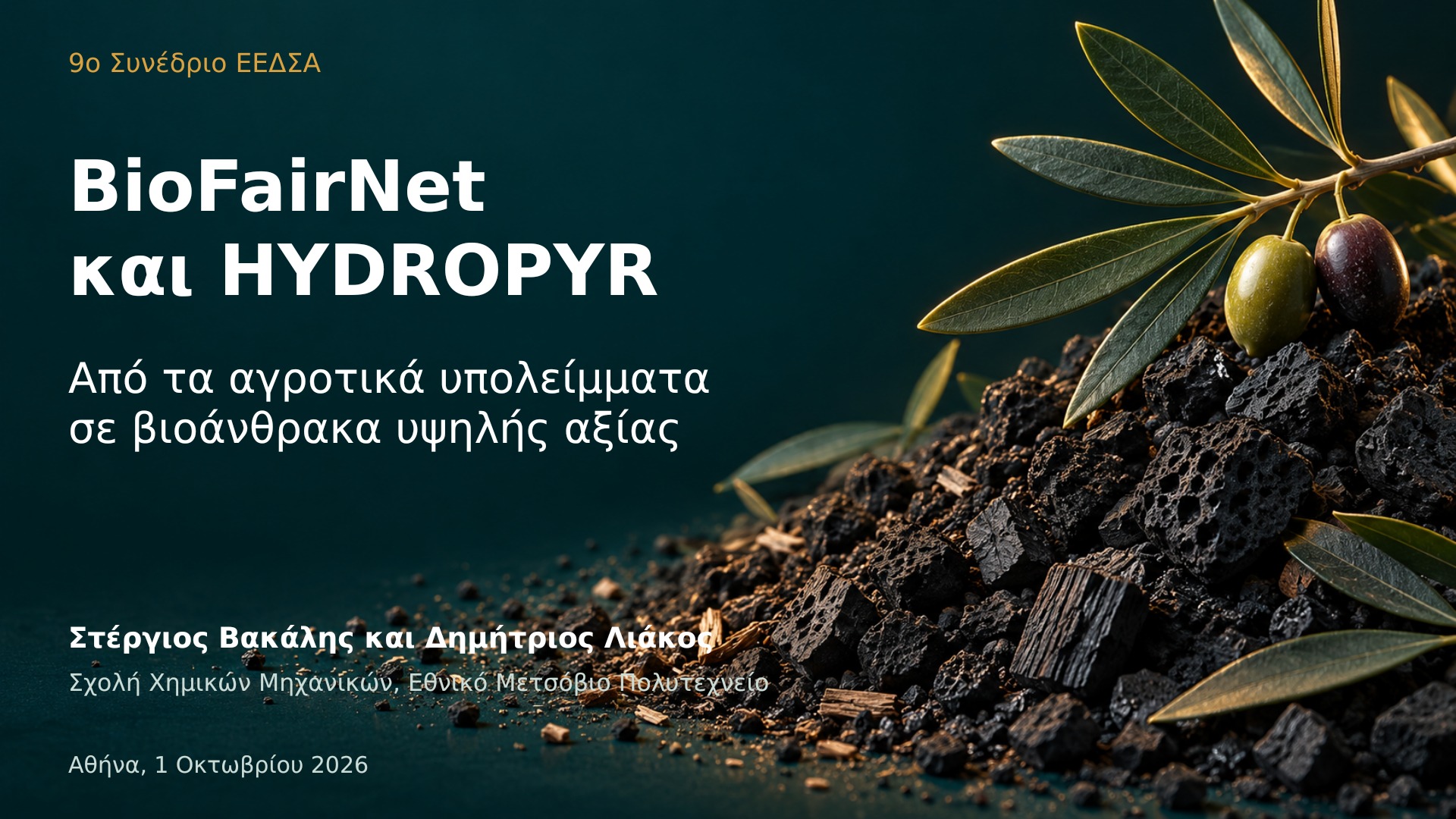
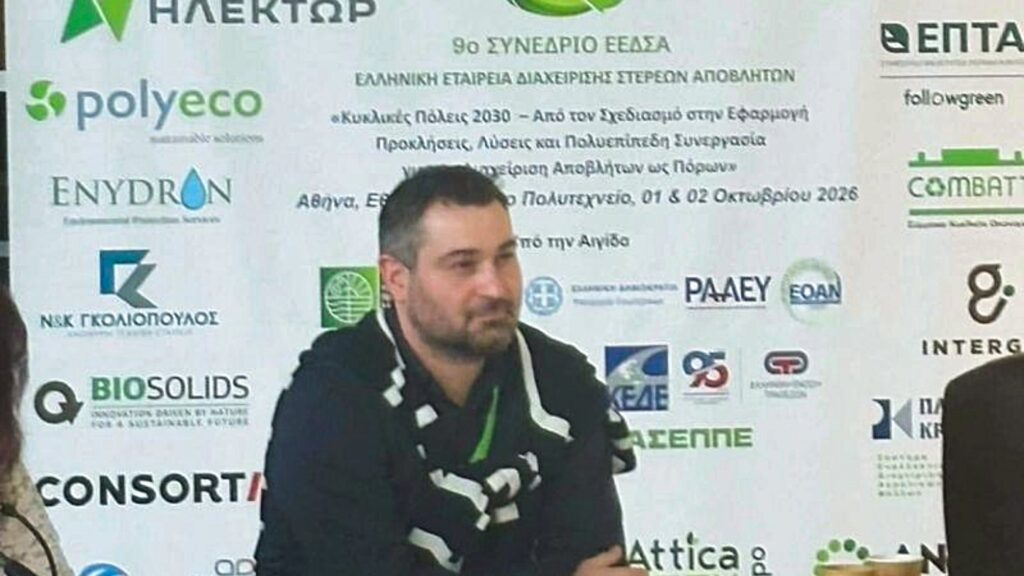
Among the contributions presented during the conference was BioFairNet’s HYDROPYR pilot, introduced by Prof. Stergios Vakalis of the University of the Aegean and NTUA’s School of Chemical Engineering. The work, co-authored with doctoral researcher Dimitrios Liakos, showcased an approach for transforming challenging agricultural residues into valuable resources while supporting circular economy objectives.
In addition to presenting the pilot, Prof. Vakalis also co-chaired one of the conference sessions.
Turning agricultural residues into resources
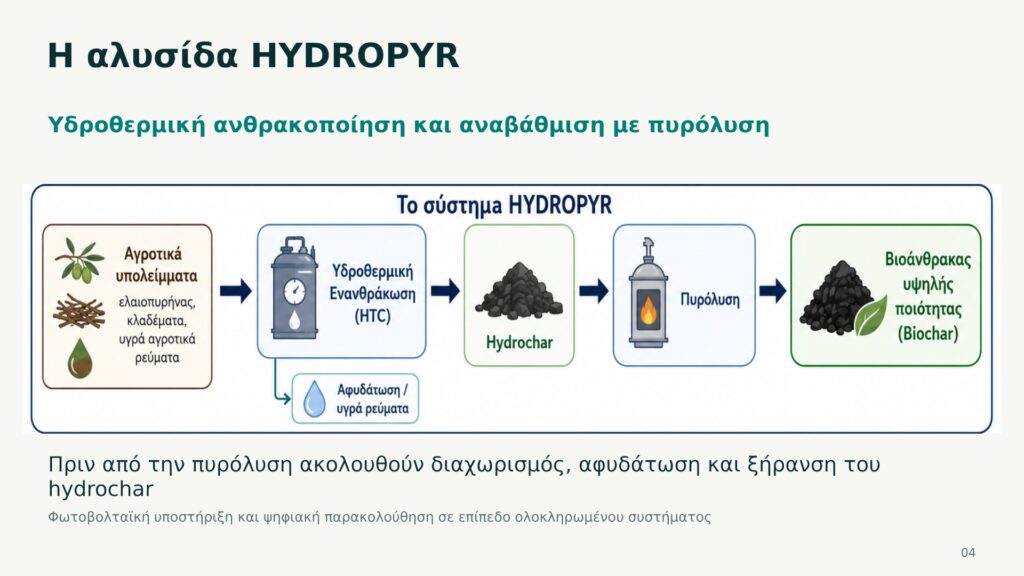
Agricultural by-products such as olive mill wastewater, olive pomace and pruning residues remain a challenge to manage because of their seasonal availability and high moisture content.
The HYDROPYR pilot explores a pathway to recover value from these materials through a combination of hydrothermal carbonisation and pyrolysis. The process transforms agricultural residues into products such as biochar, with potential applications in soil improvement, adsorption and support for anaerobic digestion, subject to quality and performance assessment.
By focusing on locally available residues, the pilot contributes to BioFairNet’s wider goal of supporting a fair transition towards a circular bioeconomy, making better use of existing resources while reducing waste.
Generating knowledge for informed decisions
Beyond the technology itself, the pilot also incorporates photovoltaic energy and digital monitoring systems that track energy use as well as material and carbon flows throughout the process.
The information generated through these activities contributes to BioFairNet’s environmental and economic assessments, helping build a clearer understanding of the opportunities and trade-offs associated with different resource recovery pathways.
This evidence-based approach is particularly important for stakeholders such as businesses, cooperatives and local communities that need to evaluate how circular solutions can be implemented in practice.
From concepts to implementation
The conference theme focused on bridging the gap between strategic ambitions and practical action. In this context, the HYDROPYR pilot offered a concrete example of how agricultural residues can be integrated into circular systems through solutions designed around real operational conditions and local resource availability.
By presenting this work at EEDSA 2026, BioFairNet contributed to wider discussions on how circular economy principles can move beyond planning and support practical, measurable approaches to resource management.