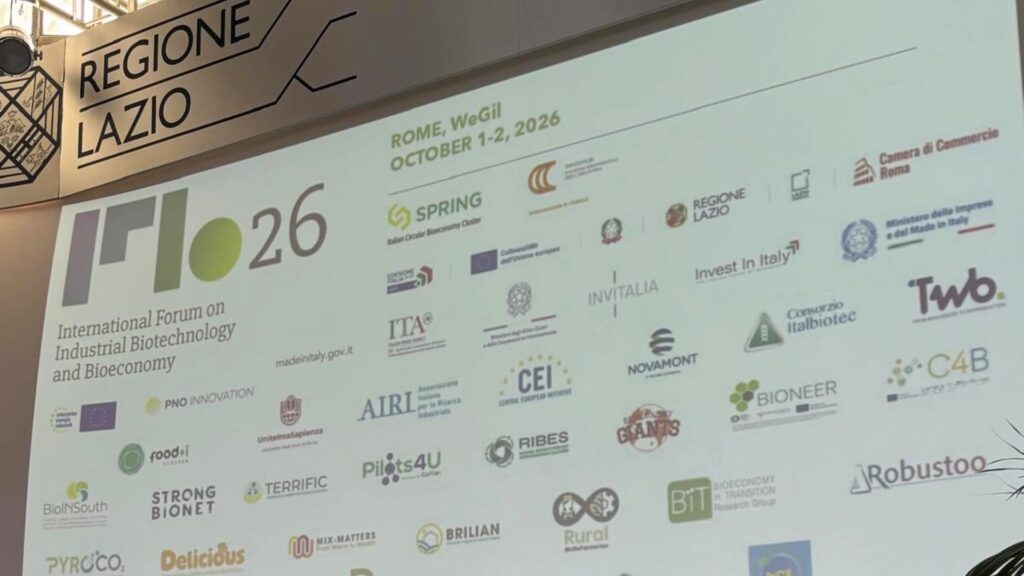
BioFairNet took part in the International Forum on Industrial Biotechnology and Bioeconomy (IFIB 2026), held on 1 and 2 October 2026 at WeGil in Rome. Organised by SPRING, the Italian Circular Bioeconomy Cluster, and Innovhub SSI, the forum brings together policymakers, researchers, companies and investors to discuss the future of the bioeconomy.
Represented by its partner Unitelma Sapienza, BioFairNet contributed to one of the event’s key discussions: how to prepare the people who will drive the bioeconomy transition, from researchers and entrepreneurs to public authorities and local communities.
Rethinking skills for the bioeconomy
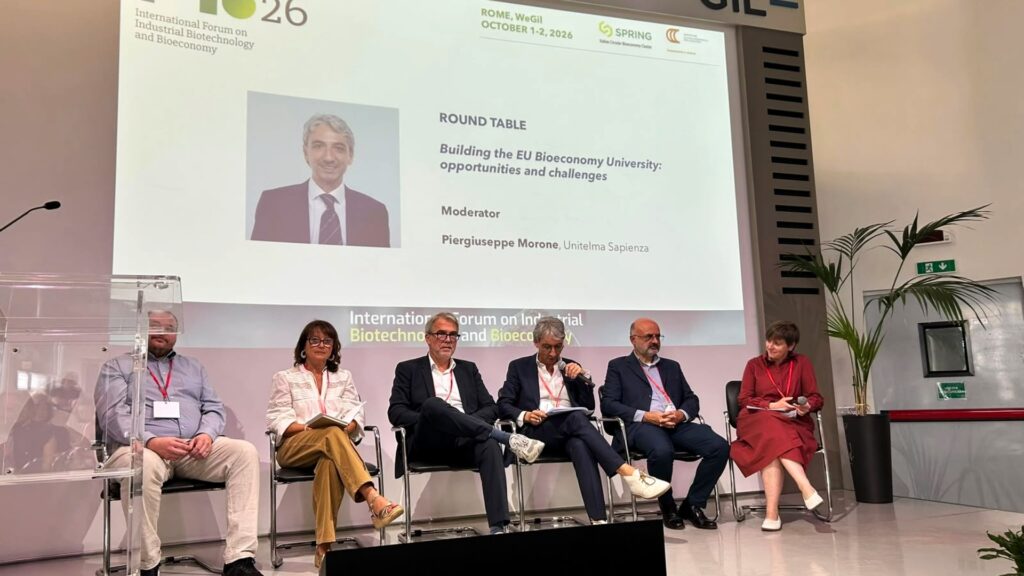
On the opening day, Prof. Piergiuseppe Morone moderated IFIB’s round table on education, one of three discussions that shaped the forum alongside clusters and investors. The session brought together academics from European universities, including institutions in Finland, France and Germany, to reflect on the skills needed to support the transition towards more sustainable and circular economic models.
The discussion highlighted that technical and business expertise remain essential, but they are no longer sufficient on their own. Future professionals will also need to understand how environmental, economic and social dimensions interact, work across disciplines and engage with a wide range of stakeholders.
Communication, participation and systems-thinking skills emerged as equally important. As bioeconomy initiatives become more complex, the ability to connect different sectors, perspectives and areas of knowledge is becoming a key part of making innovation work in practice.
People at the centre of the transition
The themes discussed in Rome connect closely with many of the challenges facing the bioeconomy today. Developing new technologies and value chains is only part of the transition. Equally important is building the capacity to bring together researchers, businesses, policymakers and citizens around shared objectives.
This is also reflected in BioFairNet’s work, particularly through stakeholder engagement, co-creation activities and multidisciplinary sustainability assessments that seek to better understand environmental, economic and social impacts across bio-based value chains.
The discussion at IFIB reinforced a simple but important message: the success of the bioeconomy transition will depend not only on innovation itself, but also on the people who have the skills to connect knowledge, sectors and communities.
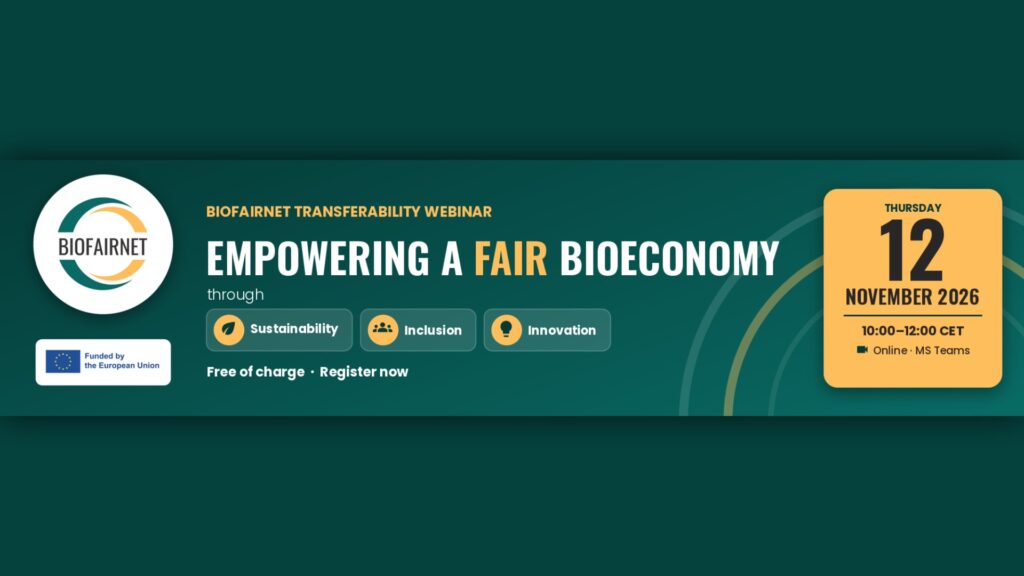
The conversation on a fair and inclusive bioeconomy continues at BioFairNet’s Transferability Webinar on 12 November 2026, “Empowering a Fair Bioeconomy through Sustainability, Inclusion and Innovation”. Registration is free.