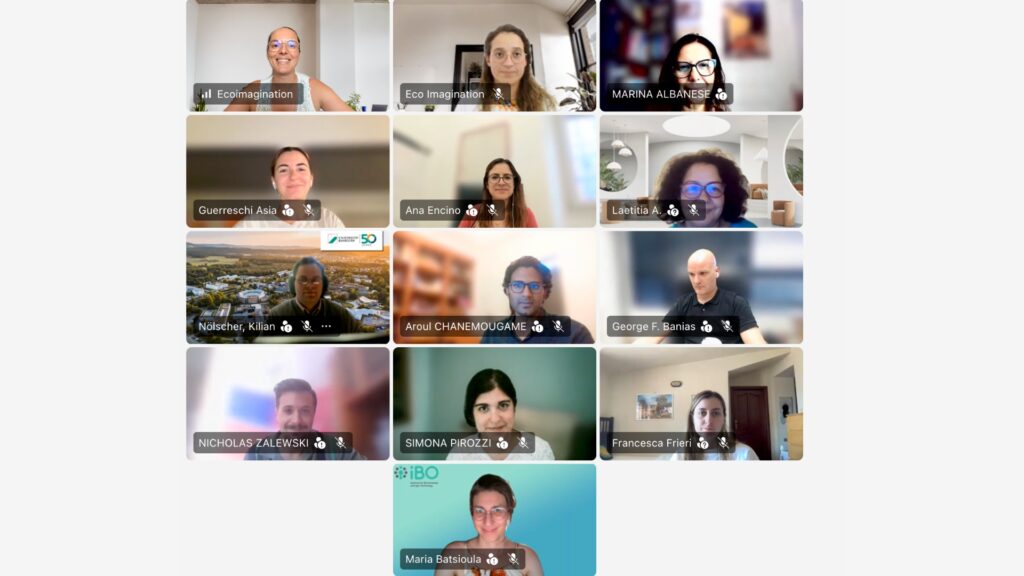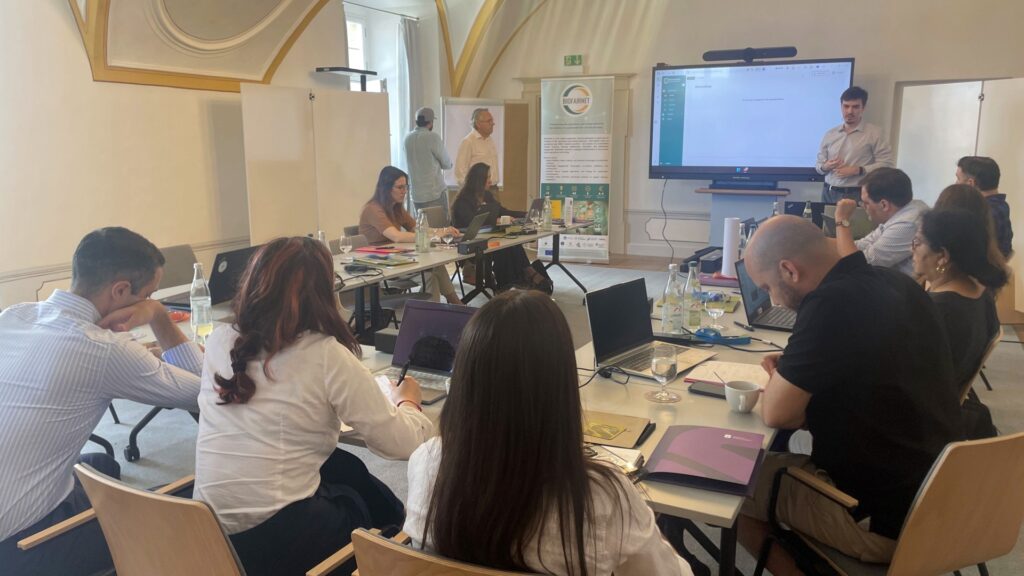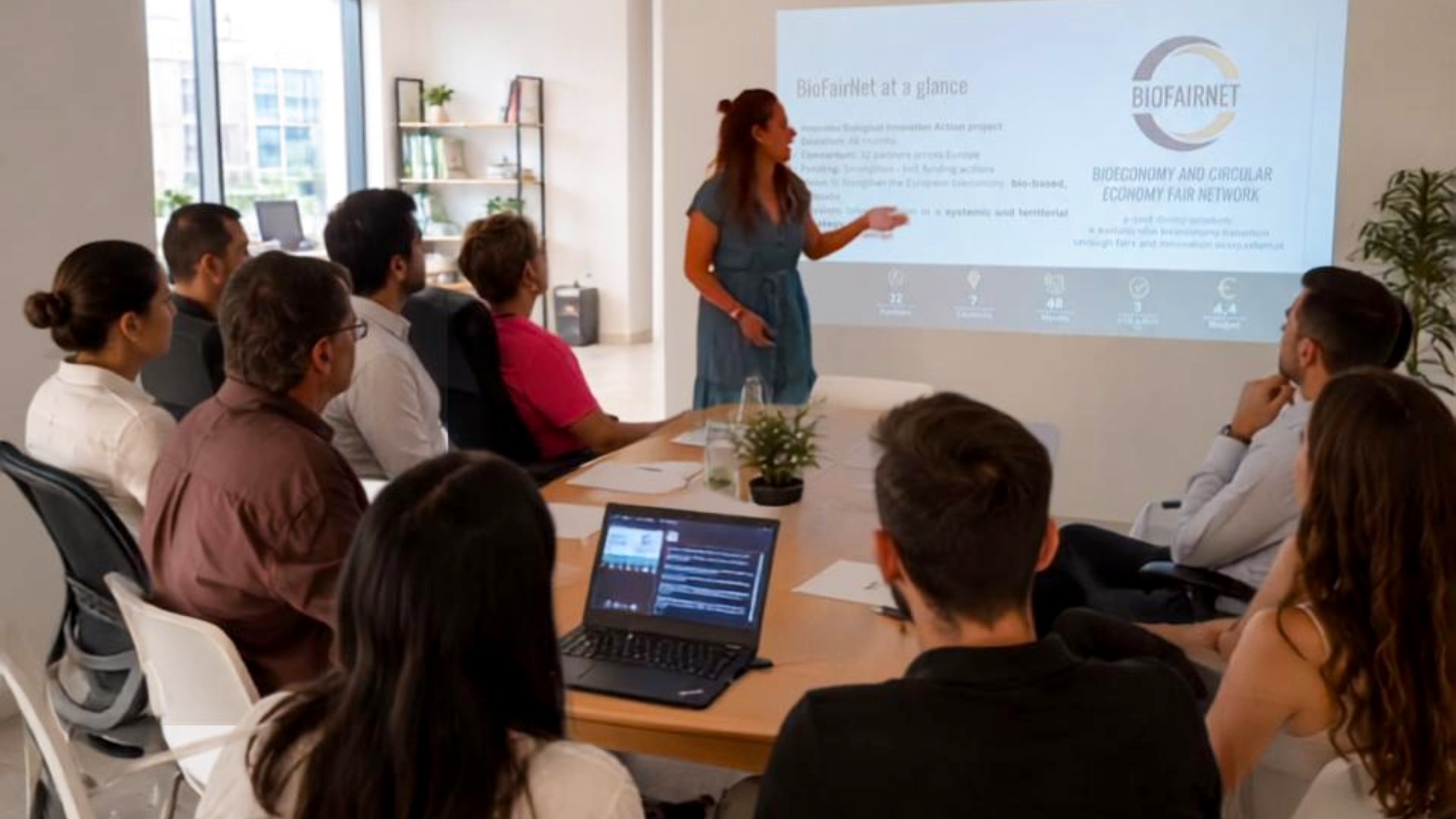
On 25 June 2026, BioFairNet hosted a hybrid event organised by Eco Innovation, bringing together participants online and in Nice, France, to explore the role of bioeconomy and circular approaches in Europe’s sustainable transition.
More than a project presentation, the session marked an important milestone for BioFairNet. It offered stakeholders the opportunity to discover the project’s vision, learn about its objectives and gain first-hand insight into the progress achieved during the first phase of implementation.
Showcasing progress and project achievements
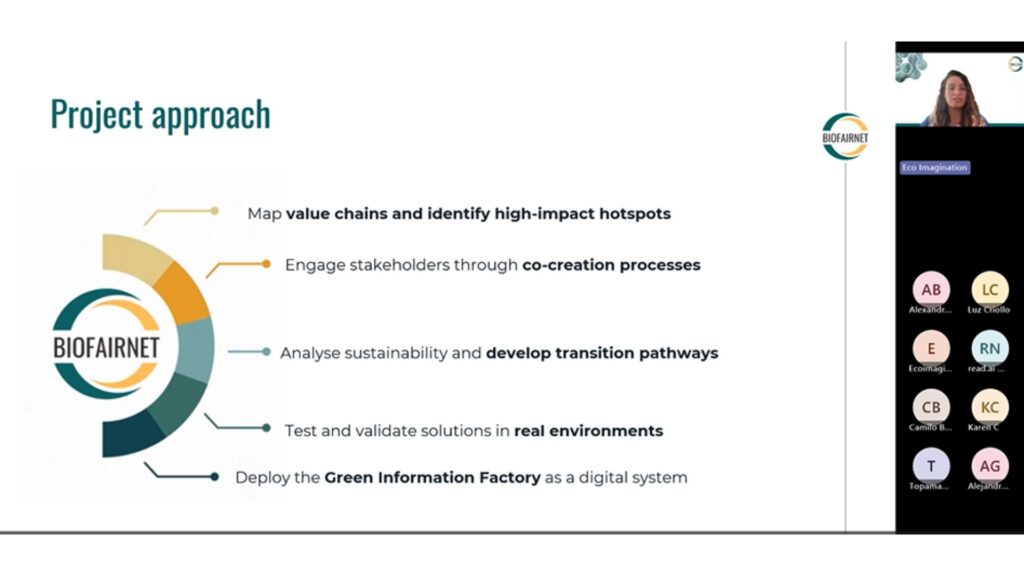
During the session, participants were introduced to BioFairNet’s approach to supporting a fair and circular bioeconomy, particularly in the agriculture and mining sectors. The discussion highlighted how the project combines data-driven analysis, stakeholder collaboration and digital innovation to support more sustainable value chains.
The event also provided an overview of key achievements reached so far, including the identification of priority regions and high-impact hotspots, the deployment of the beta version of the Green Information Factory, ongoing pilot activities and the development of transition pathways tailored to territorial realities.
These advancements reflect the project’s ambition to move beyond theory and support practical solutions that can be tested, validated and adapted to real-world conditions.
Stakeholders at the heart of BioFairNet
A central theme throughout the event was stakeholder engagement. BioFairNet is built around the idea that the transition towards a bio-circular economy cannot be achieved by technology or policy alone. It requires the active involvement of the people, organisations and communities who are part of these value chains.
Through workshops, consultations and co-creation activities, stakeholders contribute directly to shaping project outputs, identifying barriers and opportunities, and helping ensure that solutions respond to real needs. Their input has already played an important role in the development of the Green Information Factory and the project’s transition pathways.
To date, BioFairNet has engaged more than 2,000 stakeholders across sectors and regions, creating a growing community that supports knowledge exchange, collaboration and innovation.
Building a community for lasting impact
The hybrid format also created opportunities for dialogue beyond the online session. Participants attending in Nice were able to continue discussions, exchange perspectives and strengthen connections within the BioFairNet network.
As the project moves forward, stakeholder engagement will remain a cornerstone of BioFairNet’s approach. By combining research, digital tools and co-creation processes, the project continues to build a community that can help drive a fairer, more circular and more sustainable bioeconomy across Europe.
Interested in shaping the future of the bio-circular transition?
BioFairNet is always looking to engage with stakeholders from across Europe. If you would like to contribute to our co-creation process, share your experience of the transition towards more circular and sustainable value chains, or explore the first deployment of the Green Information Factory, we would love to hear from you.
Join our growing community and help us ensure that BioFairNet solutions are developed with stakeholders, for stakeholders.
Contact us through the BioFairNet Community of Practice and become part of the conversation.